



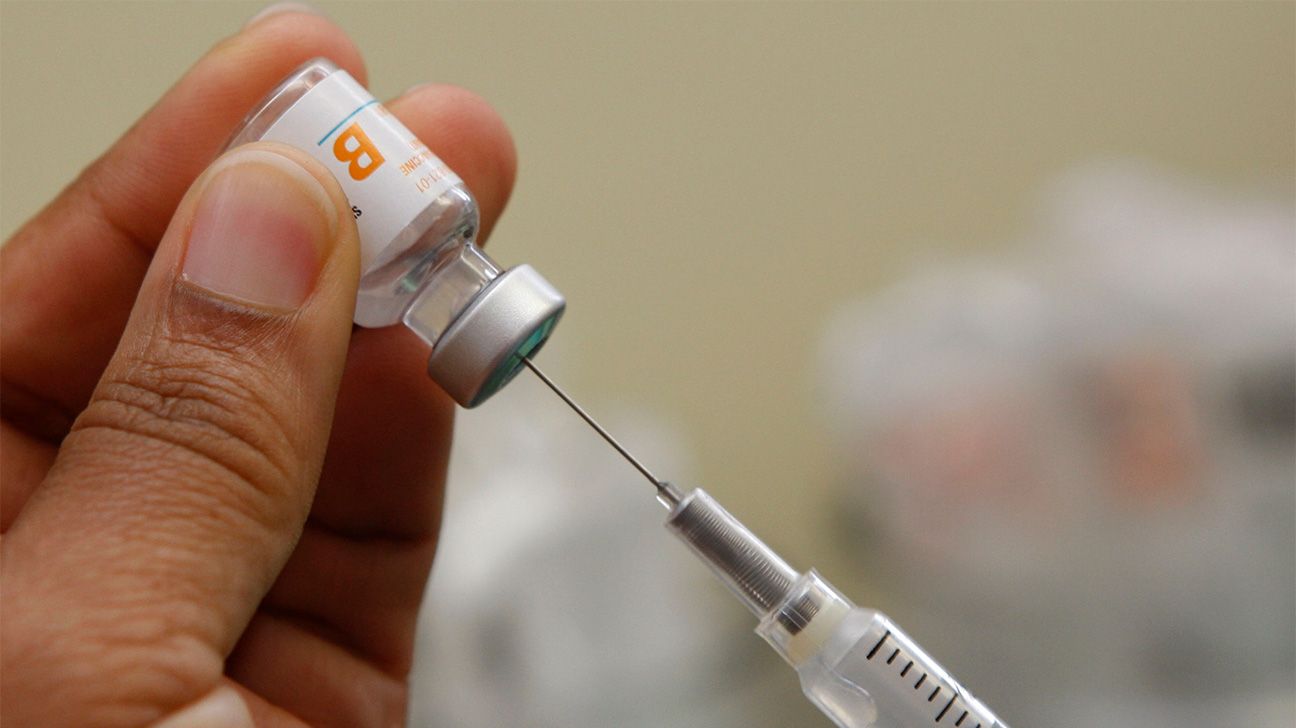
- A CDC advisory committee voted today to alter the hepatitis B childhood vaccine schedule.
- The vote has upended more than 3 decades of vaccination policy in the United States.
- Experts claim that the change is not based on scientific evidence and will result in more cases of hepatitis B and downstream effects, including cancer and cirrhosis.
A vaccine advisory group to the CDC voted today, in an unprecedented move, to alter the childhood vaccine schedule for hepatitis B. The vote is contrary to evidence that the vaccine is both safe and highly effective, experts say, and would potentially upend decades of progress in eliminating a highly contagious and incurable infection.
The vote, initially planned for an ACIP meeting in September, was tabled at that time. It was again delayed on Thursday after committee members stated that they had not been given sufficient time to review the changes made to the language in the recommendation.
“I consider that this fourth iteration of votes in 96 hours is still incredibly problematic,” said ACIP member Dr. Joseph Hibbeln, as reported by CNN.
“We really need to know what we’re voting on,” a voice could be heard saying over the livestream on Thursday, in a meeting apparently fraught with confusion.
On Friday, the Advisory Committee on Immunization Practices (ACIP) voted 8-3 to no longer recommend universal hepatitis B vaccination for newborns, reversing its stance on the at-birth hepatitis B vaccine, which had been recommended since 1991. No new evidence, such as updated safety data, was presented to support the decision.
No other country in the world with an established birth dose has ever retreated from that recommendation. America is now the first.
“There’s no scientific rationale for this,” said Jake Scott, MD, clinical associate professor of infectious diseases at Stanford Medicine. “They are taking away the safety net, guaranteeing that more babies will become chronically infected, and years later, some will die of liver disease that could have been prevented.
John Schieffelin, MD, associate professor of pediatrics and section chief of pediatric infectious disease at Tulane University School of Medicine, said the decision “undermines the community’s trust in the scientific process.”
“It was based on a misunderstanding or a misrepresentation of all the science that’s been put in for over 30 years on how safe this vaccine is and how effective it is giving this dose within the first 24 hours of life,” he said.
Perinatal transmission from mother to infant, which can occur at or around birth, is a major driver of hepatitis B, resulting in up to 50% of all cases, by some estimates. About 90% of newborns infected perinatally will develop a chronic infection, and one in four will die prematurely from liver disease, including cirrhosis and cancer (hepatocellular carcinoma).
A universal birth dose has been one of the great success stories of American public health, William Schaffner, MD, a professor of preventive medicine at Vanderbilt University, told Healthline.
“That program has been extraordinarily successful. The success of this program has been beyond what we could’ve imagined at the time. It essentially eliminated infant, childhood, and adolescent acute hepatitis B,” he said.
Schaffner laments that the vote “is turning back the clock to the bad old days.”
In the US, hepatitis B cases have fallen by 99% since 1991, when the birth dose was implemented. The vaccine is a three-shot series, with the first dose administered at birth, the second 1-2 months later, and the third between 6 and 18 months of age.
The ACIP vote represents a marked shift toward embracing the vaccine skepticism of HHS Secretary RFK Jr., who has consistently and publicly
Public health and infectious disease experts have expressed concerns that the new recommendations will undermine trust in childhood vaccines and create gaps in immunity that will allow for the recurrence of preventable diseases.
“Any alteration, especially delaying of vaccination, really increases the risk that we’re going to see more Hepatitis B infections in children,” said Schieffelin.
The new recommendation states:
“For infants born to HBsAg-negative women: ACIP recommends individual-based decision making, in consultation with a health care provider, for parents deciding when or if to give the HBV vaccine, including the birth dose. Parents and health care providers should consider vaccine benefits, vaccine risks, and infection risks. For those not receiving the HBV birth dose, it is suggested that the initial dose is administered no earlier than 2 months of age.”
Dr. Cody Meissner, one of the three ACIP members who voted “no,” stated, “We are doing harm by changing the wording.”
The committee also voted in favor (6 yes, 4 no, 1 abstention) of recommending that parents consider using blood tests to check infants’ immunity to hepatitis B before deciding whether additional shots are needed.
The recommendations are not yet official, as the CDC director must approve them before they become policy.
The universal hepatitis B vaccination at birth is considered both safe and effective for infants, even when given within the recommended window of 24 hours after birth.
The review found that the at birth hepatitis B vaccine “has consistently been demonstrated to be safe” based on consistent, far-reaching evidence from randomized controlled trials, large cohort studies, and safety monitoring systems.
Short-term reactions such as localized redness, swelling, and low grade fever have been reported, but not any increased incidence of vaccine-related serious adverse effects.
Furthermore, it found no increased risk of adverse events in infants administered the vaccine at birth compared to those receiving a delayed shot.
And what about those niggling concerns about
Hepatitis B vaccines containing thimerosal were recommended for removal from the market in 1999, following an FDA review. Notably, that review found “
Thimerosal was removed from childhood vaccines in
Proponents for the change in recommendation claim that a birth dose is unnecessary, arguing that it is predominantly spread through sexual activity and drug use. While it is true that the virus can be spread this way, the argument doesn’t sufficiently address perinatal infection.
“They underestimate the importance of mother-to-infant transmission,” Schaffner said.
Under RFK Jr., administration officials have pushed for increased hepatitis B screening initiatives for pregnant women, which would support a selective approach to vaccination. The strategy would shift away from universal vaccination to a model in which only high risk infants, such as those born to mothers who are injection drug users or with confirmed hepatitis B.
But screening alone is insufficient, according to experts.
“We tried that before 1991, and it did not work. Yes, it reduced neonatal transmission a little, but not comprehensively,” said Schaffner.
The CIDRAP review came to the same conclusion. After attempting different screening and prevention strategies throughout the 1980s, ACIP eventually settled on the universal model that has existed for more than thirty years.
A return to a selective approach through screening alone is fraught with risk and logistical hurdles.
“This selective vaccination system sounds sensible, right? But the data are very clear: there are a lot of missed cases,” Scott said.
Barriers to an effective and comprehensive screening strategy are diverse, according to Schaffner. Some women simply don’t get tested. Some may get tested early during pregnancy, but not later on, so if an infection occurs after the initial test it can be transmitted. Tests may also produce false negatives.
There may also simply be a disconnect — lost records or miscommunication — between the facility that does the testing and where the mother gives birth.
“There is a whole series of very practical, down-to-earth reasons that indicate that if you are really interested in having mother to infant transmission be zero, or as close to it as we can get, you can’t do it on an individual basis,” Schaffner said.
