



Editor’s note: This is the third article in a series of stories profiling medtech companies that are changing the field of robotic surgery. You can read the first two stories here and here.
Is there a robot developer that can break Intuitive Surgical’s stranglehold on the market?
Virtual Incision CEO Jim Alecxih says hundreds of companies are trying, but the robotic surgery pioneer, with a more than $200 billion market cap, still has no true competition.
“That’s a really rare set of events in any industry,” said Alecxih, an experienced medtech executive who, as a former Intuitive senior vice president, played a part in the market leader’s growth.
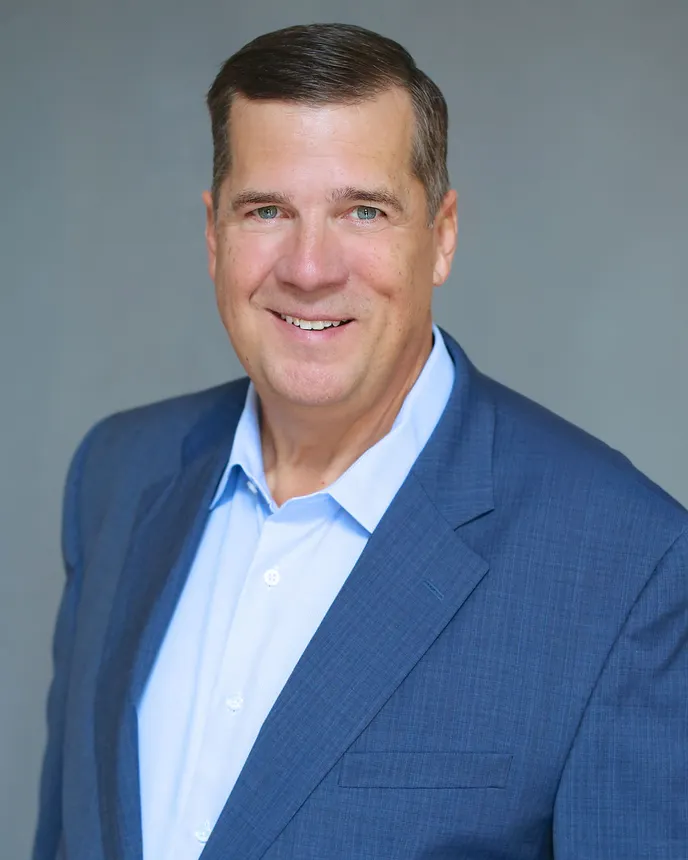
Jim Alecxih, CEO of Virtual Incision
Courtesy of Virtual Incision
Virtual Incision, an Intuitive challenger, hired Alecxih in June to lead the Lincoln, Nebraska-based robot maker as it accelerates development and commercialization of its next system, the M2.
The robot’s compact platform is designed to be easier to set up, use and store than larger systems like Intuitive’s da Vinci, so it can be added to any operating room.
Miniaturization is a key selling point for Virtual Incision. Effective entrants to the surgical robotics market must bring a fundamentally different form, Alecxih said.
“It can’t look and feel like da Vinci because if it does — if it’s da Vinci light — then the end users, the surgeons, are always going to choose da Vinci,” said Alecxih. “They have the most features, they have the track record, they have more reps, they have more resources. And so it has to look and feel different than da Vinci.”
A version of M2’s predecessor, the MIRA robot, gained attention last year when it traveled to the International Space Station for a collaboration with NASA to test the potential for remote surgery in space guided by surgeons back on Earth. Virtual Incision co-founder and Chief Technology Officer Shane Farritor worked on Mars rovers, the robotic vehicles that explore the planet’s surface, early in his career before joining the University of Nebraska.
MIRA is short for Miniaturized In Vivo Robotic Assistant, and its design is distinctly different.
“Our robotic arms are actually inside the patient. Everybody else’s are outside the patient,” said Alecxih. “Our elbows are inside the patient, and that makes us a very unique design.” Miniaturized motors power the arms, unlike the cable-and-pulley systems of other surgical robots, he said, providing advantages in wrist action, strength and other aspects of movement.
“If you look at the market, there’s over 200 companies that are trying to develop robots, and no one has gotten any commercial traction at all.”

Jim Alecxih
Virtual Incision CEO
Enabled by its small size and advances in remote surgery, the robot could one day expand access to minimally invasive procedures in rural areas and developing countries where facility constraints and lack of surgical expertise are barriers to care.
David vs. Goliath
Alecxih said he has looked at most of the robotic systems in development. The newcomers see a high-growth, high-margin business, he said, and want to gain entrance. “The size of the market, the opportunity, the growth rates, the economic benefits are all driving innovation in robotics,” Alecxih said.
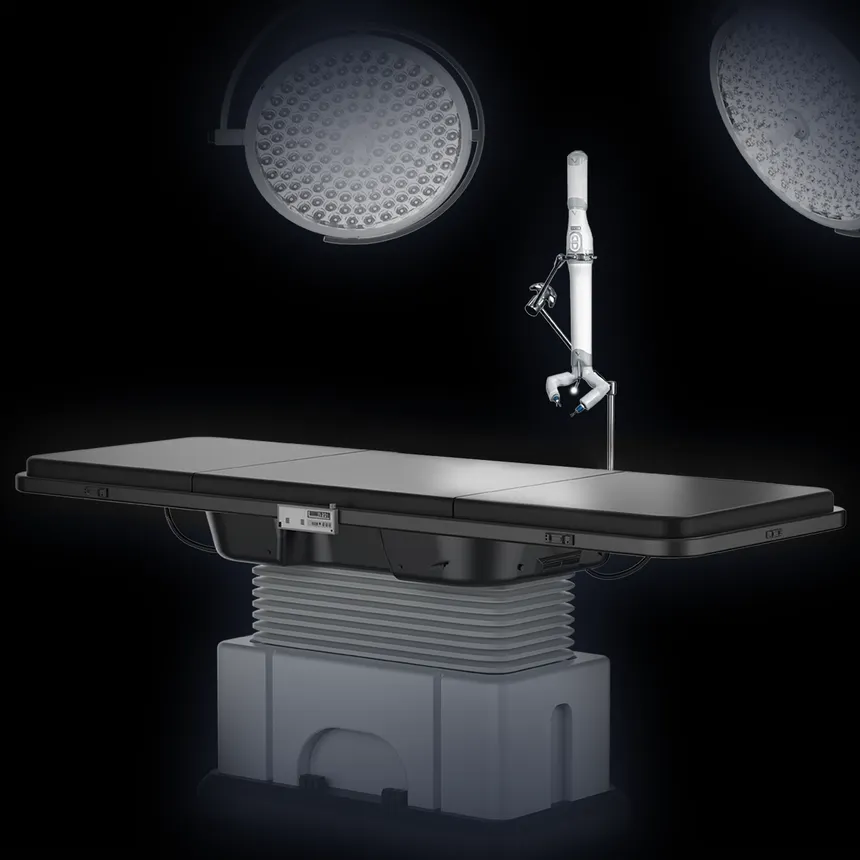
The MIRA surgical robot is designed to fit in any operating room.
Permission granted by Virtual Incision
But it is a difficult market to enter, let alone succeed in.
“If you look at the market, there’s over 200 companies that are trying to develop robots, and no one has gotten any commercial traction at all,” said Alecxih.
Market hopefuls are going up against the most successful medtech startup of the last 30 years, he said.
“Intuitive Surgical is one of the best run companies in any industry. They have a fantastic product. They have world-class engineers, great leadership and, in my opinion, the best commercial team in the industry,” Alecxih said. “And they’re formidable competitors. So I think there’s going to be a lot of companies that try to enter and don’t have much success.”
To compete, a new robot should be designed for a specific market, and that market needs to be large enough to support the business, he said. Simply aiming for a piece of Intuitive’s market share won’t cut it. The robotic system also must be low in complexity to keep staffing requirements from inhibiting adoption, and financially viable in the target market for the long term.
“The reason I joined Virtual Incision is because it has all four of those elements,” the CEO said.
Target markets
Virtual Incision received de novo authorization from the Food and Drug Administration in February 2024 for use of MIRA in colectomy procedures, or colon removal. The regulatory pathway classifies new technologies that do not have a predicate device.
Virtual Incision was formed in 2006 by University of Nebraska engineering professor Shane Farritor and Dmitry Oleynikov, who was a professor of surgery at the University of Nebraska Medical Center.
Courtesy of Virtual Incision
The company is now gearing up to submit its M2 robot for FDA review. M2 is similar to MIRA, but even smaller. Both systems are single-port, meaning procedures are performed through a single incision site.
In addition to colectomy, Virtual Incision sees opportunities for its platform in gynecology. It is now assessing the safety and efficacy of the robot in benign hysterectomy procedures in an international clinical study that is intended to support future regulatory submissions.
“There’s still a lot of laparoscopy and open surgery that can be converted to robotics, and we feel like that’s the best use of our device,” Alecxih said. Plans to pursue clearances for gallbladder removal, inguinal and umbilical hernia repair, and “a host of other cases” are also in the works, he said.
“We’ll probably make a submission in early 2027 for M2, and then we’ll get into a cadence of regular submissions for different applications,” Alecxih said.
The company is building its manufacturing capacity and solidifying its supply chain in preparation. “We have an outstanding engineering and operations staff,” he said, “and so we’ll be ready to go to market when the FDA clears us.”
