




What You Should Know
– Apella has announced an $80M Series B round to scale its ambient AI platform designed for the most complex environment in the hospital: the operating room (OR). The round was led by HighlandX, with returning investors Vensana Capital, Casdin Capital, PFM Health Sciences, Upside Partnership, and Operator Partners, and includes new investors K2 HealthVentures, OpAmp Capital, and Houston Methodist.
– By using computer vision to autonomously identify 14 surgical case events and write data back to the EHR, Apella has enabled partners like Houston Methodist and MUSC to increase surgical volume by an average of 5% while reducing clinician administrative burden.
The “Vision” Gap: Bringing Ambient AI to the Procedure Room
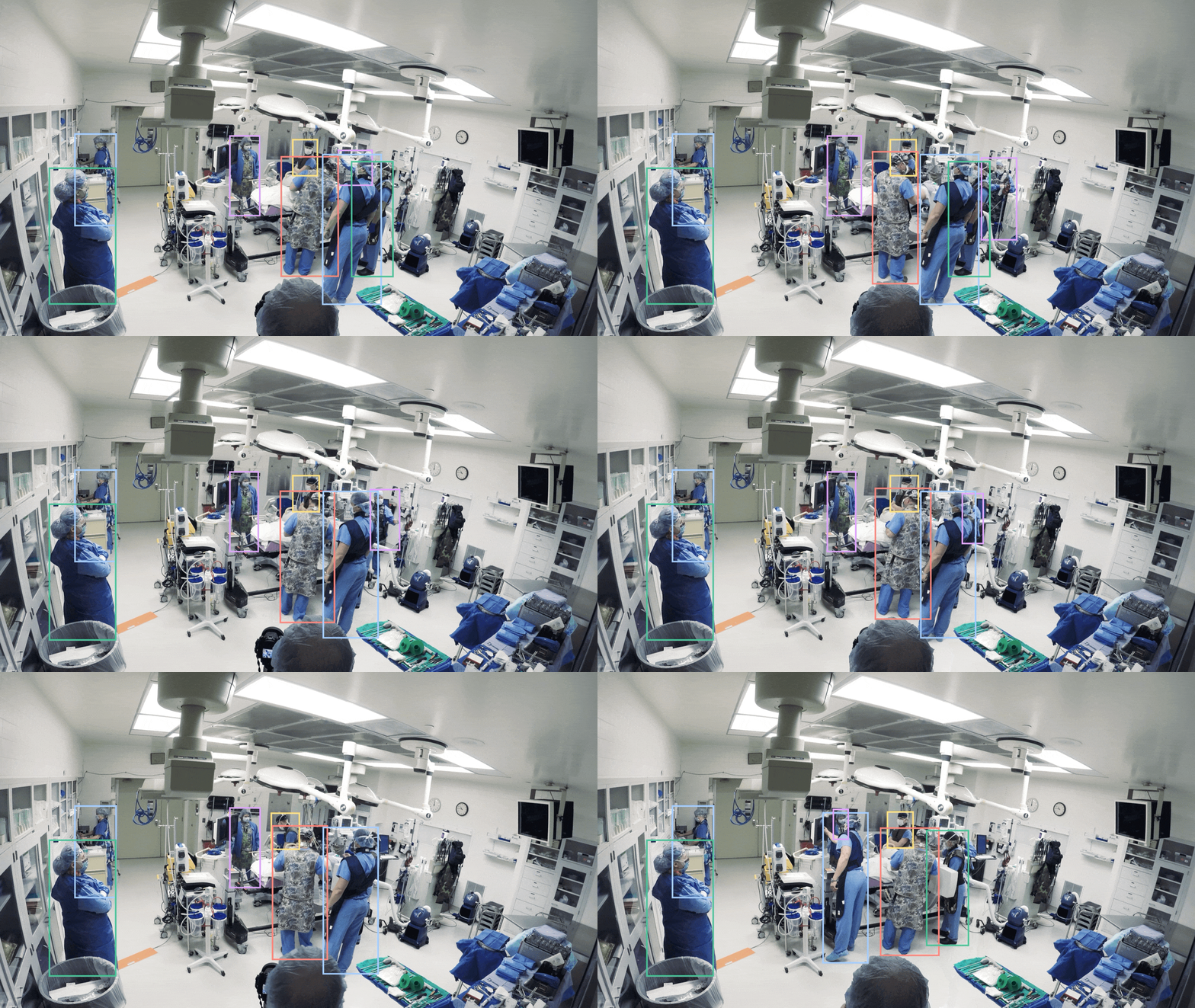
While 2025 was the year of “Ambient Speech” for outpatient notes (reaching 79% adoption), the procedural areas remained a data “black hole.” Apella addresses this by moving from audio to video intelligence.
- Autonomous Documentation: The platform uses computer vision to track surgical milestones and autonomously update the EHR, ensuring that timestamps are accurate and “pajama time” for surgeons is minimized.
- Enterprise Scale: Houston Methodist has already scaled the technology from a 36-room pilot to over 200 operating rooms system-wide.
- Procedural Expansion: Beyond the OR, Apella is now deploying into interventional radiology, cardiology, and endoscopy suites.
The Horizon Update: Predictive Capacity Management
A critical addition to the platform is Horizon, a predictive engine that solves the industry’s most persistent headache: inaccurate case duration data.
- Utilization Predictions: Horizon uses historical and real-time data to maximize resource capacity before the day even begins.
- Staffing Optimization: By predicting exactly when a case will end, hospitals can optimize staffing shifts and reduce the “waiting game” for surgical teams.
The Rise of the ‘Procedural Operating System’
With $80M in new capital and backing from HighlandX and Houston Methodist, Apella is positioning itself as the “OS” for the procedural areas of the hospital. As hospitals face an 11 million health worker shortage by 2030, the ability to automate the logistics of the OR is no longer a luxury—it is the only way to protect the bottom line and the surgical workforce.
