



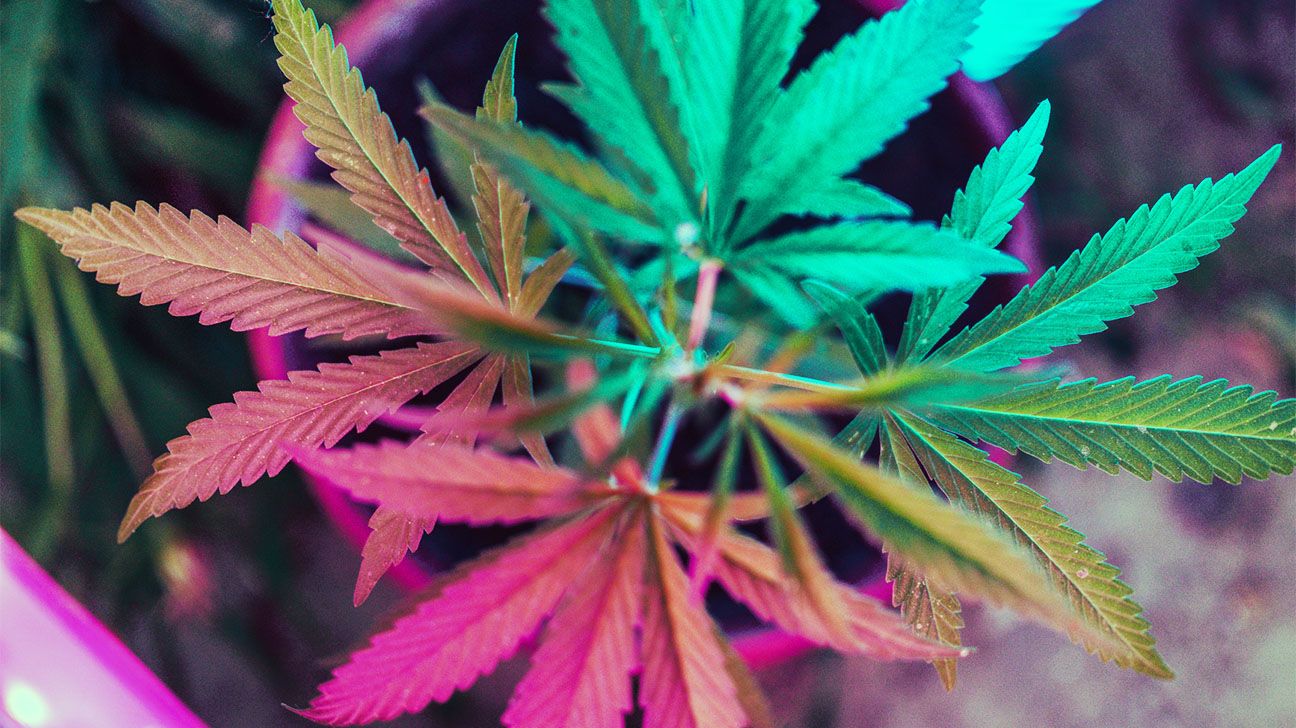
- Similar to alcohol consumption, cannabis users could benefit from a similar “standard drink” framework, researchers say.
- A new study suggests that setting limits could help guide safer consumption among those who frequently use cannabis.
- Clearer dose guidance could help cannabis users and clinicians better understand risks associated with heavy use, particularly among young people.
Standardized dose units for cannabis could help establish clearer limits for safer use, according to new research.
The United States has a clear definition of a “
A well-defined and standardized unit of measurement is crucial for cannabis users and healthcare professionals, researchers say.
A new study published on January 12 in
About
If you use cannabis on a regular basis, being aware of your consumption can help support healthier decisions. For doctors, a framework for cannabis use could facilitate consistent research methods and more reliable diagnoses.
“The aim of this work is harm reduction,” said first study author Rachel Lees Thorne, PhD, associate director of the Addiction and Mental Health Group (AIM) at the University of Bath, United Kingdom.
“No level of cannabis use is completely safe; however, clearer information about THC intake could help people who use cannabis regularly to potentially reduce their risk,” Thorne told Healthline.
Rather than relying on typical measures of cannabis use, such as frequency or weight, the researchers focused on total THC intake.
THC is the primary psychoactive compound in cannabis and is responsible for the “high” feeling people may associate with cannabis.
Cannabis doses are often subjective and difficult to measure accurately. Not only does the potency of cannabis products — including flower, edibles, vapes, and even beverages — vary widely, but colloquial measures like “one joint” can also vary from user to user.
Instead, the study uses 5 milligrams (mg) of THC as a standard unit. This specific quantity was first implemented by the National Institute on Drug Abuse (NIDA) in 2021 as a requirement to help standardize cannabis research.
The study used data from the CannTeen study, a year-long observational study that tracked cannabis use patterns among adults and adolescents. The study included 150 participants, comprising 65 adults in their twenties and 85 adolescents. These cohorts were intentionally monitored separately to identify potential differences in how cannabis use affects adolescents and adults.
Over a 1-year period, participants regularly checked in and reported on their cannabis use, including product type (such as flower or hash), potency, and frequency. This data was then combined and converted into an estimated number of weekly standard (5mg THC) doses.
After one year of observation and data collection, participants were assessed for CUD symptoms and severity.
The researchers found that in adults, the risk of CUD increased at around 8 units (40mg THC) per week. Adults who used 13 or more units per week had a greater risk of moderate to severe CUD.
Cannabis’ effects on adolescents were even more pronounced, requiring just 6 units to increase their risk of CUD. It also took less THC to increase adolescents’ risk of more severe CUD: just an additional half unit per week.
In an additional analysis, the 8-unit threshold proved to be a reliable predictor of which adult participants had CUD. Roughly 80% of adult participants who used fewer than 8 units per week did not have CUD, whereas around 70% of those who used more than 8 units per week did.
For George Singletary, MD, assistant professor of addiction medicine at the Tulane University School of Medicine, the message is clear: “The more you use, the riskier your use is.” Singletary wasn’t involved in the research.
If we have a standard unit for alcohol, why not cannabis?
The answer to that question is complex, according to Paul Armentano, deputy director of the National Organization for the Reform of Marijuana Laws (NORML). Armentano wasn’t involved in the study.
“Ideally, there exists a need for health professionals and others to have greater specificity when delineating cannabis use versus misuse,” Armentano told Healthline.
“However, given the wide variety of formulations of cannabis products available and the uniquely poor bioavailability of many of these products, there remain serious questions as to the practicality, feasibility, and real-world application of the methods proposed in this paper,” he said.
Unlike alcohol, which is almost uniformly ingested, cannabis products can be consumed in a number of ways, like smoking, eating, vaping, and topical use. The absorption and bioavailability of THC — the amount that actually makes it into your bloodstream — is also heavily dependent on how you consume it.
How cannabis is consumed can also affect the onset (how long it takes to feel the effects) and duration.
Additionally, in the United States, recreational and medical cannabis laws are set at the state level rather than federally, creating a patchwork of regulations that makes it difficult to establish a single, nationwide standard.
Singletary said that a unit standard would be beneficial, but establishing one would be an uphill battle against the cannabis industry.
“I think it’s really hard to get marijuana users to really quantify how much they’re using. And that’s the first thing I tell anybody with an addiction problem: if you can’t measure it, then you can’t manage it,” Singletary said.
