

Close Menu

    Subscribe to Updates

    Get the latest creative news from Healthradar about News,Health and Gadgets.

    Bitte aktiviere JavaScript in deinem Browser, um dieses Formular fertigzustellen.
    Wird geladen
    What's Hot

    Nearly 40% of All Cancers Caused by Preventable Risk Factors

    7. Februar 2026

    ICYMI: the week’s 7 biggest tech stories from Alexa+ leaving early access to the Fitbit founders‘ a new health tracking platform

    7. Februar 2026

    New York governor signs law allowing medical aid in dying for terminally ill residents

    7. Februar 2026
    Facebook X (Twitter) Instagram
    Facebook X (Twitter) Instagram Pinterest Vimeo
    healthradar.nethealthradar.net
    • Home
    • Ai
    • Gadgets
    • Health
    • News
    • Contact Us
    Contact
    healthradar.nethealthradar.net
    Home»News»How Cedars-Sinai is Using AI ‚Avatars‘ to Replace Animal Testing“
    News

    How Cedars-Sinai is Using AI ‚Avatars‘ to Replace Animal Testing“

    HealthradarBy Healthradar16. Januar 2026Keine Kommentare3 Mins Read
    Share Facebook Twitter Pinterest LinkedIn Tumblr Reddit Telegram Email
    How Cedars-Sinai is Using AI ‚Avatars‘ to Replace Animal Testing“
    Share
    Facebook Twitter LinkedIn Pinterest Email


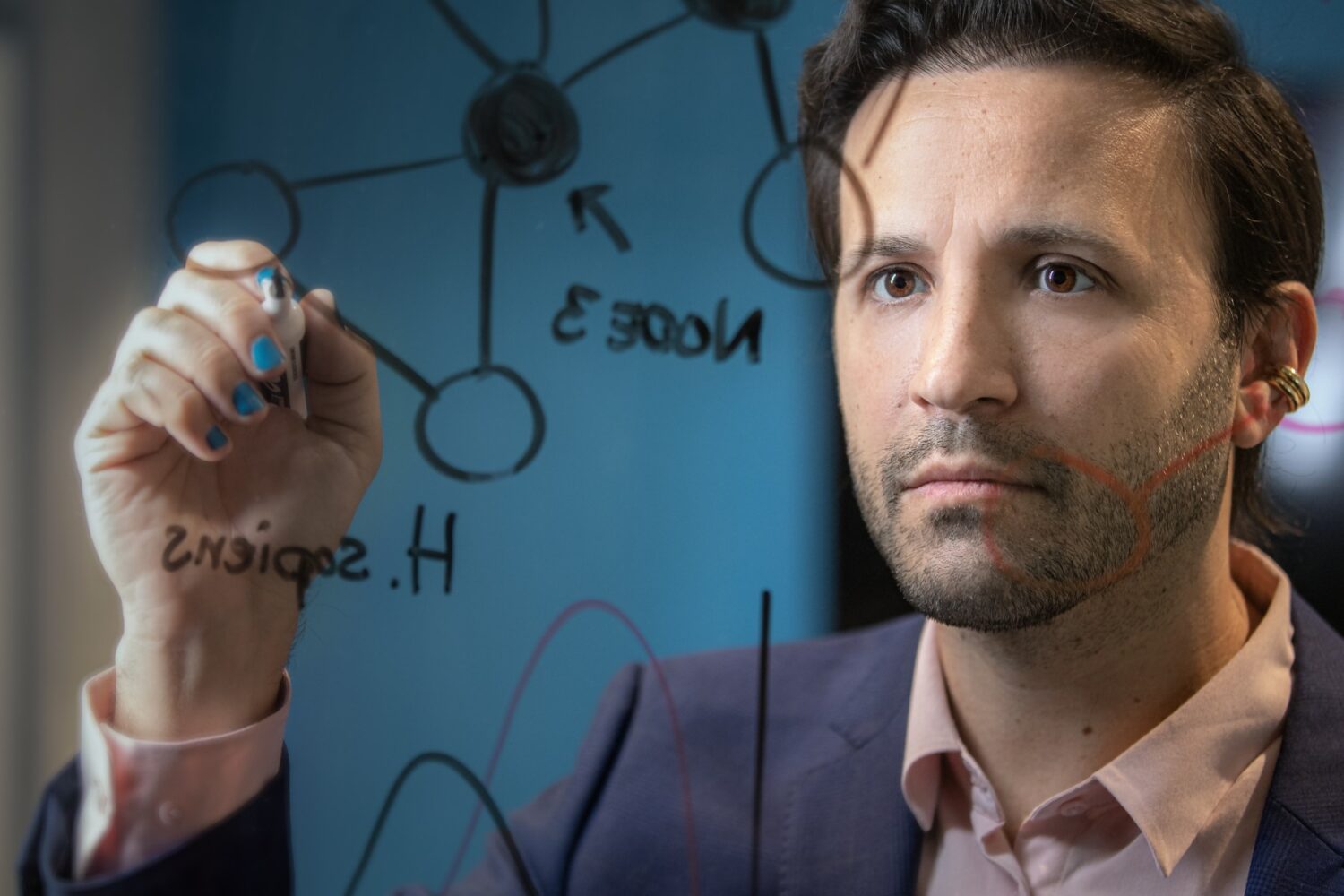
    Nicholas Tatonetti, PhD KronosRx: How Cedars-Sinai is Using AI 'Avatars' to Replace Animal Testing"
    Nicholas Tatonetti, PhD, Vice Chair of Computational Biomedicine at Cedars-Sinai (image credit)

    What You Should Know

    – Cedars-Sinai has secured a $5.05M ARPA-H contract to build KronosRx, an AI platform that predicts drug toxicity by pairing millions of electronic health records with “patient avatars”—human stem-cell-derived organoids. 

    – The strategic initiative aims to solve the 30% failure rate of clinical trials caused by adverse drug reactions that animal models fail to detect, potentially slashing drug development costs and accelerating patient access to safe therapies.

    Combatting the “Valley of Death” in Drug Development

    The “valley of death” in drug development is often paved with promising molecules that looked perfect in a lab rat but proved toxic in a human. Today, Cedars-Sinai announced a major offensive against this billion-dollar bottleneck. Under an up to $5,054,235 contract from the Advanced Research Projects Agency for Health (ARPA-H), the institution is developing KronosRx, a platform designed to replace animal proxies with “patient avatars” and deep-learning computational models.

    The stakes are high. Current estimates suggest that more than 30% of clinical trials fail solely due to adverse drug reactions (ADRs). By the time these toxicities are discovered in Phase I or II human trials, pharmaceutical companies have often already spent hundreds of millions of dollars.

    The Technical Architecture: Avatars Meets Big Data

    KronosRx isn’t just another predictive algorithm; it is a multi-modal integration of biological hardware and computational software.

    • The Hardware (Patient Avatars): Utilizing induced pluripotent stem cells (iPSCs), the team creates organoids and organ-on-chip systems. These “avatars” are tiny, functioning cellular models of human organs—such as the heart and brain—that mimic real-time responses to experimental drugs.
    • The Software (AI & EHR Integration): These biological responses are fed into AI models trained on millions of longitudinal, anonymous data points from Cedars-Sinai’s vast Electronic Health Record (EHR) network.

    According to Nicholas Tatonetti, PhD, the project’s lead investigator and Vice Chair of Computational Biomedicine at Cedars-Sinai, the goal is “dynamic” modeling. Unlike static animal tests, KronosRx accounts for variables like age, comorbidities, and polypharmacy (how a drug interacts with other medications a patient is already taking).

    The Team Behind the Tech

    The project brings together a “who’s who” of regenerative and computational medicine:

    • Clive Svendsen, PhD: Focusing on neurotoxicity using stem cell technology.
    • Arun Sharma, PhD: Utilizing cardiac organoids to assess cardiotoxicity (a leading cause of drug withdrawal).
    • Graciela Gonzalez-Hernandez, PhD: Managing the complex task of mining unstructured text in EHRs to find “molecular phenotypes.”

    “Each year, many promising drugs fail in trials because animal tests and short-term lab studies cannot predict how medicines behave in real people over time,” said Nicholas Tatonetti, PhD, vice chair of Computational Biomedicine at Cedars-Sinai and the project’s lead investigator. “These failures delay lifesaving treatments and drive up drug development costs.”


    Source link

    animal Artificial Intelligence Avatars CedarsSinai replace Testing
    Share. Facebook Twitter Pinterest LinkedIn Tumblr Email
    Previous ArticleRFK Jr: A ‘good mother’ knows not to trust experts on matters of public health
    Next Article The Economic Case for Women’s Health Investment
    ekass777x
    Healthradar
    • Website

    Related Posts

    News

    Opentrons and NVIDIA Partner to Develop Physical AI for Laboratory Robotics –

    7. Februar 2026
    News

    Sword Intelligence Launches in UK and Europe with AI-Led Care Operations Platform

    7. Februar 2026
    News

    AI Adoption in Healthcare Doubles, But Cybersecurity Risks Loom Large

    6. Februar 2026
    Add A Comment
    Leave A Reply Cancel Reply

    Top Posts

    Garmin Venu 4: Everything we know so far about the premium smartwatch

    7. August 202586 Views

    Nanoleaf LED face mask review: fantastic value for money, but only by cutting some corners

    16. Oktober 202551 Views

    The Top 3 Tax Mistakes High-Earning Physicians Make

    7. August 202535 Views

    Dexcom raises sales expectations, discusses G8 plans

    31. Juli 202523 Views
    Stay In Touch
    • Facebook
    • YouTube
    • TikTok
    • WhatsApp
    • Twitter
    • Instagram
    Latest Reviews

    Subscribe to Updates

    Bitte aktiviere JavaScript in deinem Browser, um dieses Formular fertigzustellen.
    Wird geladen
    About Us

    Welcome to HealthRadar.net — your trusted destination for discovering the latest innovations in digital health. We are dedicated to connecting individuals, healthcare professionals, and organizations with cutting-edge tools, applications

    Most Popular

    Garmin Venu 4: Everything we know so far about the premium smartwatch

    7. August 202586 Views

    Nanoleaf LED face mask review: fantastic value for money, but only by cutting some corners

    16. Oktober 202551 Views
    USEFULL LINK
    • About Us
    • Contact Us
    • Disclaimer
    • Privacy Policy
    QUICK LINKS
    • Ai
    • Gadgets
    • Health
    • News
    • About Us
    • Contact Us
    • Disclaimer
    • Privacy Policy
    Copyright© 2025 Healthradar All Rights Reserved.

    Type above and press Enter to search. Press Esc to cancel.