



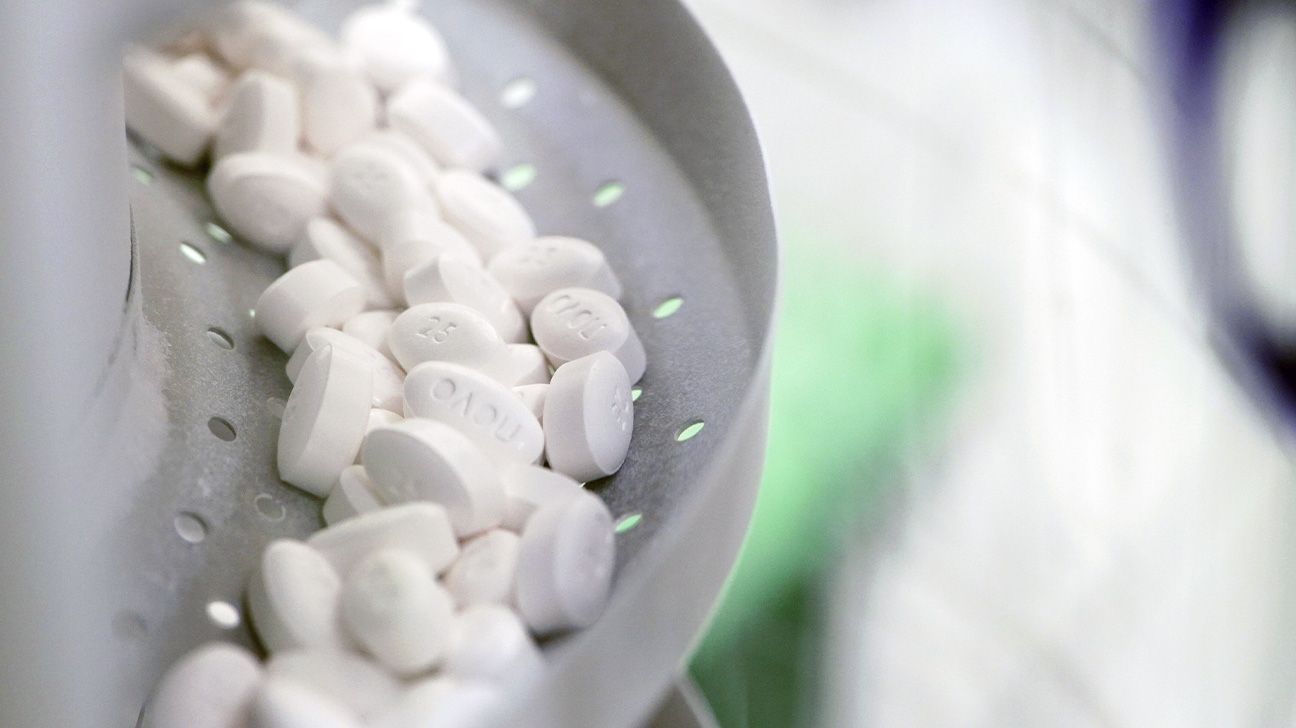
- Novo Nordisk officials said a new pill version of its weight loss drug Wegovy is now available in the United States.
- The Food and Drug Administration recently approved the Wegovy tablet as a prescription treatment for obesity and weight management.
- Experts say a pill version of a GLP-1 drug could make it easier for people to stay on a weight loss regimen, but they added that diet and exercise still remain the most important components of these types of programs.
A well-known weight loss medication is now available in the United States in pill form.
The availability comes just weeks after the Food and Drug Administration (FDA) approved the tablet version of the GLP-1 drug Wegovy for weight loss.
Officials at Novo Nordisk, the manufacturer of the medication, said a “starter dose” of 1.5 milligrams (mg) can now be purchased with a prescription at pharmacies and other facilities in the United States.
Higher doses of the Wegovy pill will be available by the end of this week, company officials said.
They note that the new pill is the only medication that is specifically prescribed for weight loss that can be taken as a tablet as opposed to an injection.
They reported that the Wegovy pill produced an average of 16% weight loss in people who took the medication over a 64-week period in a phase III clinical trial.
“We know there are people who are interested in addressing their weight but have been waiting on the sidelines for a medicine that was right for them. For many of them, that wait is over as we can now offer the powerful efficacy of Wegovy in a once-daily pill,” said Ed Cinca, senior vice president of marketing and patient solutions at Novo Nordisk, in a statement.
Eli Lilly is currently seeking FDA approval for an oral weight loss medication it has developed and tested in phase III clinical trials.
Experts say a pill form of GLP-1 medication could help people adhere to a weight loss routine that also involves a healthy diet and regular exercise.
“The advent of a weight loss pill certainly has some advantages,” said Mir Ali, MD, a general surgeon, bariatric surgeon, and medical director of MemorialCare Surgical Weight Loss Center at Orange Coast Medical Center in California. “People are more used to taking pills than they are taking injections.”
“I think this will be a great option for individuals who have not considered taking these drugs… due to them being injectables,” added Kristin Kirkpatrick, RD, the president of KAK Consulting and a dietitian at the Cleveland Clinic Department of Wellness & Preventive Medicine in Ohio.
Novo Nordisk officials said the Wegovy pill is now available in more than 70,000 U.S. pharmacies, including CVS and Costco, as well as select telehealth providers.
They said the medication will cost about $149 for a month’s supply without insurance coverage or special savings under an agreement between the company and the Trump administration.
With insurance, the Wegovy starter dose could cost as little as $25 per month.
A 4 mg dose of the pill will also cost $149 per month until April 15. After that, the monthly price will rise to $199. The 9 mg and 25 mg doses are projected to cost $299 a month.
The Wegovy pill must be taken on an empty stomach with a small amount of water. Patients are directed not to eat, drink, or ingest other medications for 30 minutes after taking the pill.
It is intended to be prescribed along with a reduced calorie diet and daily exercise routine to help people lose weight.
“Patients will have a convenient, once-daily pill that can help them lose as much weight as the original Wegovy injection,” said Mike Doustdar, president and chief executive officer of Novo Nordisk, in a statement to Healthline.
“The Wegovy pill provides patients with a new, convenient treatment option that can help patients start or continue their weight loss journey,” he added.
They said they are generally cheaper than injections and don’t need to be refrigerated.
In addition, the pills don’t involve needles.
“[The pill] may open up the option for many more people,” Kirkpatrick told Healthline. “It also appears that the price may be more affordable taking away yet another potential barrier to consideration for taking these drugs.”
However, Sun Kim, MD, an associate professor of medicine at Stanford University in California, said once-a-week injections can be considered more convenient for some people than remembering to take a pill each day.
“I also think it may be easier to quit or delay an oral medication when faced with side effects like nausea, which is common with GLP-1 medications,” she told Healthline.
Some experts note that the costs of the new medication could continue to be a barrier.
Ali said insurance companies may be reluctant to cover these medications, at least initially, as they have been in the past with other weight loss treatments.
“These kinds of issues aren’t going to change dramatically,” he told Healthline. “Companies may not be inclined to offer insurance coverage.”
“I’m concerned about access as coverage of GLP-1 medications will be reduced for patients, especially those who rely on Medicaid,” noted Kim.
Kirkpatrick shared similar concerns.
“This will probably differ based on a case-by-case basis, but the price may still be too high for some individuals to consider — especially if their diagnosis is not covered by insurance,” she said.
“The other factor I see with some of my patients is the length in which insurance will cover the medication as well, with many patients stopping the medication once they have to pay out of pocket,” Kirkpatrick added.
There are a number of options for people seeking treatment for type 2 diabetes or obesity. Most of these medications are approved only for adults.
Wegovy has been available as an injection medication since receiving FDA approval in June 2021. It now costs $349 per month for the higher doses for consumers who don’t use insurance. The lower doses are available for $199 per month until March.
Wegovy contains the active ingredient semaglutide in both pill and injectable form. Ozempic, which is also manufactured by Novo Nordisk, is also a semaglutide-based GLP-1 medication.
Wegovy has been approved for use as a treatment for obesity or weight management issues. Ozempic is approved only for use as a treatment for diabetes. Ozempic is also only available as an injection.
Another Novo Nordisk product, Rybelsus, has been available as a tablet since September 2019 as a treatment for type 2 diabetes. It also is semaglutide-based.
Eli Lilly also has two GLP-1 medications, both of which contain the active ingredient tirzepatide. Mounjaro is approved as a treatment for type 2 diabetes while Zepbound is approved for weight loss treatment.
Eli Lilly is currently developing a weight loss medication in pill form called orforglipron. That drug doesn’t contain the active ingredient tirzepatide. It is a GLP-1 medication that affects different receptors than Zepbound and Mounjaro.
Eli Lilly officials reported that a recent phase III clinical trial indicated that orforglipron helped people maintain weight loss after they switched to the daily pill from injectable medications Zepbound and Wegovy.
The company has submitted an application to the FDA to have orforglipron approved for use as a treatment for weight management.
“If approved for the treatment of obesity, orforglipron could provide a convenient alternative for the millions of individuals living with obesity around the globe to continue their long-term health journey,” said Kenneth Custer, PhD, executive vice president and president of Lilly Cardiometabolic Health, in a statement.
Most experts agree that weight loss medications do not magically melt away fat or burn off calories.
The medications work by suppressing the body’s hunger and appetite responses, prompting people to eat less.
Experts say these medications only assist a person in developing and maintaining a healthy diet and a regular exercise program.
“GLP-1-based medications, including the Wegovy pill, have been revolutionary to the care of patients living with obesity,” Kim said. “However, it is important to also continue to focus on eating a quality diet and exercising regularly.”
Ali said that 90% of a person’s weight is the result of what they eat. Exercise, he said, can help burn off calories, but diet is the most important component.
He said he advises his patients to reduce their consumption of carbohydrates and sugars while increasing their intake of proteins and vegetables.
“There are no magic solutions,” he said. “You must eat well and exercise regularly.”
Kirkpatrick said her advice remains the same no matter what type of weight loss medication a person is taking.
“Lifestyle change also has to accompany the pharmacological approach. Diet and exercise will still be strong predicators of long-term success,” she said.
