



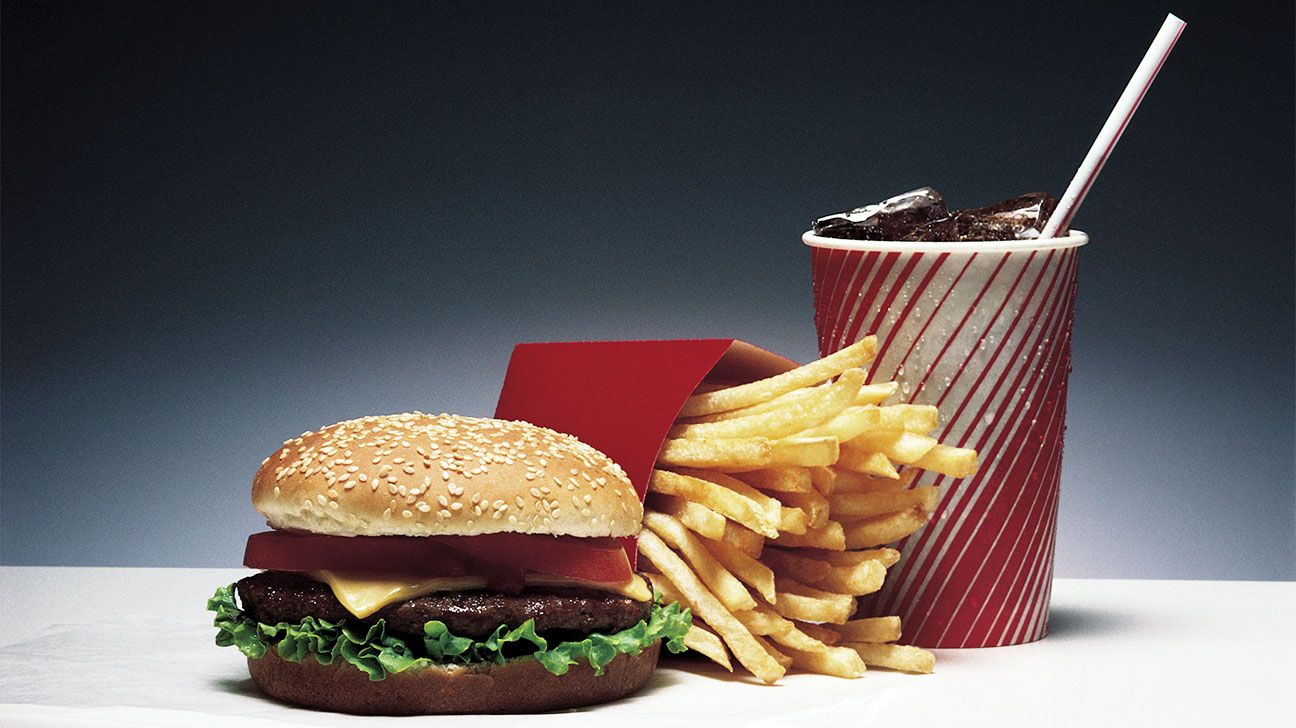
- Higher intake of ultra-processed foods is associated with increased mortality among cancer survivors.
- A recent study shows that people with the highest intake of ultraprocessed foods had a 48% higher rate of death from any cause and a 57% higher rate of death from cancer.
- Researchers say increased inflammation and an elevated resting heart rate could explain the link between ultra-processed food intake and increased mortality.
Cancer survivors who eat higher amounts of ultra-processed foods in their diets have a significantly increased risk of death from all causes, as well as from cancer.
A new study found that people who ate the highest amount of ultra-processed foods by weight ratio had a 48% higher rate of death from any cause. They also had a 57% higher rate of death from cancer compared to those who ate the least amount of ultra-processed foods.
“What people eat after a cancer diagnosis may influence survival, but most research in this population has focused only on nutrients, not how processed the food is,” study author Marialaura Bonaccio, PhD, a researcher at the Research Unit of Epidemiology and Prevention at IRCCS Neuromed in Pozzilli, Italy, said in a press statement.
“The substances involved in the industrial processing of foods can interfere with metabolic processes, disrupt gut microbiota, and promote inflammation. As a result, even when an ultra-processed food has a similar calorie content and nutritional composition on paper compared to a minimally processed or ‘natural’ food, it could still have a more harmful effect on the body,” Bonaccio continued.
In conducting the research, Bonaccio and colleagues followed more than 24,000 people between March 2005 and December 2022.
The participants were ages 35 or older at the commencement of the study, and all lived in southern Italy.
Within that cohort, 802 cancer survivors were enrolled at the beginning of the study and provided detailed dietary information via a food questionnaire. The researchers used the NOVA classification system, which categorizes foods into groups based on the extent of their level of processing, to determine whether a food was ultra-processed.
The researchers calculated the proportion of ultra-processed foods in a person’s diet using both a weight ratio (total daily weight of ultra-processed foods divided by total daily weight of all foods and beverages) and an energy ratio (total daily calories from ultra-processed foods divided by total daily calories).
The researchers adjusted for other factors like smoking status, overall diet quality, BMI ,and medical history before dividing the individuals into three groups based on the weight ratio of ultra-processed foods they ate.
Those in the group with the highest third of ultra-processed foods consumption had around a 48% higher rate of death from any cause, as well as a 57% higher rate of death from cancer, compared with those in the lowest third.
“The fact that the association between ultra-processed foods and all-cause death persisted even after adjusting for overall diet quality suggests that the negative health effects are not explained solely by poor nutrient profiles, but that the level and nature of industrial food processing itself play an independent role in influencing long-term health outcomes,” Bonaccio said in the press statement.
Experts like Nilesh Vora, MD, a board certified medical oncologist and medical director of the MemorialCare Todd Cancer Institute at Long Beach Medical Center in Long Beach, CA, who was not involved in the study, say the research findings aren’t surprising.
“There’s been a lot in recent literature and conferences about foods that we eat amongst cancer survivors. We’ve seen data in colon cancer, in breast cancer, that are consistent with the fact that pro-inflammatory foods are correlated to cancer recurrence among survivors. So I think there isn’t much surprise that ultra-processed foods might also have a link to cancer recurrence,” he told Healthline.
“There’s a level of inflammation that can happen when we have processed foods and ultra-processed foods… so I think that’s one reason why this could be,” he continued.
“Inflammation has long been associated with cancer. So whenever you have an inflammatory process, you have the potential for mutation growth. And mutation growth is the kind of crux to form mutations amongst your normal cells, [which] can lead to an increased risk of cancer,” Vora said.
The study authors say their results suggest that elevated resting heart rate and increased inflammation may explain the link between higher intake of ultra-processed foods and increased mortality.
Dana Hunnes, PhD, a senior clinical dietitian at UCLA Health, who was not involved in the study, says the findings are an important reminder of some of the problems with eating too much ultra-processed food.
“It can be extra difficult for cancer survivors due to the toll that cancer takes on a person’s body just at baseline, and may increase the risk of all-cause mortality on its own or may be an effect multiplier of the baseline risk that is associated with ultra-processed foods in general.”
To determine whether the content of specific ultra-processed foods affected mortality risk, the researchers examined data from foods categorized into seven groups. These included:
Whilst some of these groups of foods were associated with higher mortality, others showed no clear pattern.
But Bonaccio argued that it’s difficult to interpret data on individual processed foods, and that the overall dietary pattern is what matters.
“The main message for the public is that overall consumption of ultra-processed foods matters far more than any individual item,” she said in the press statement.
“Focusing on the diet as a whole and reducing ultra-processed foods overall and shifting consumption toward fresh, minimally processed, home-cooked foods is the most meaningful and beneficial approach for health,” she added.
“A practical way to do this is by checking labels: Foods with more than five ingredients, or even only one food additive, are likely to be ultra-processed.”
The study was observational and does not prove that ultra-processed foods cause increased mortality among cancer survivors.
But Vora argues there are still benefits for cancer survivors in reducing their intake of ultra-processed foods.
“Make changes now. It doesn’t harm anybody to change lifestyle and focus on diet and exercise,” he said.
“I can’t definitively tell a patient that ultra-processed foods are for sure associated with cancer recurrence because they don’t have that large, randomized, prospective trial. But if there’s enough of a clue that this is something that could be, then I’d say, make that change now,” he added.
