



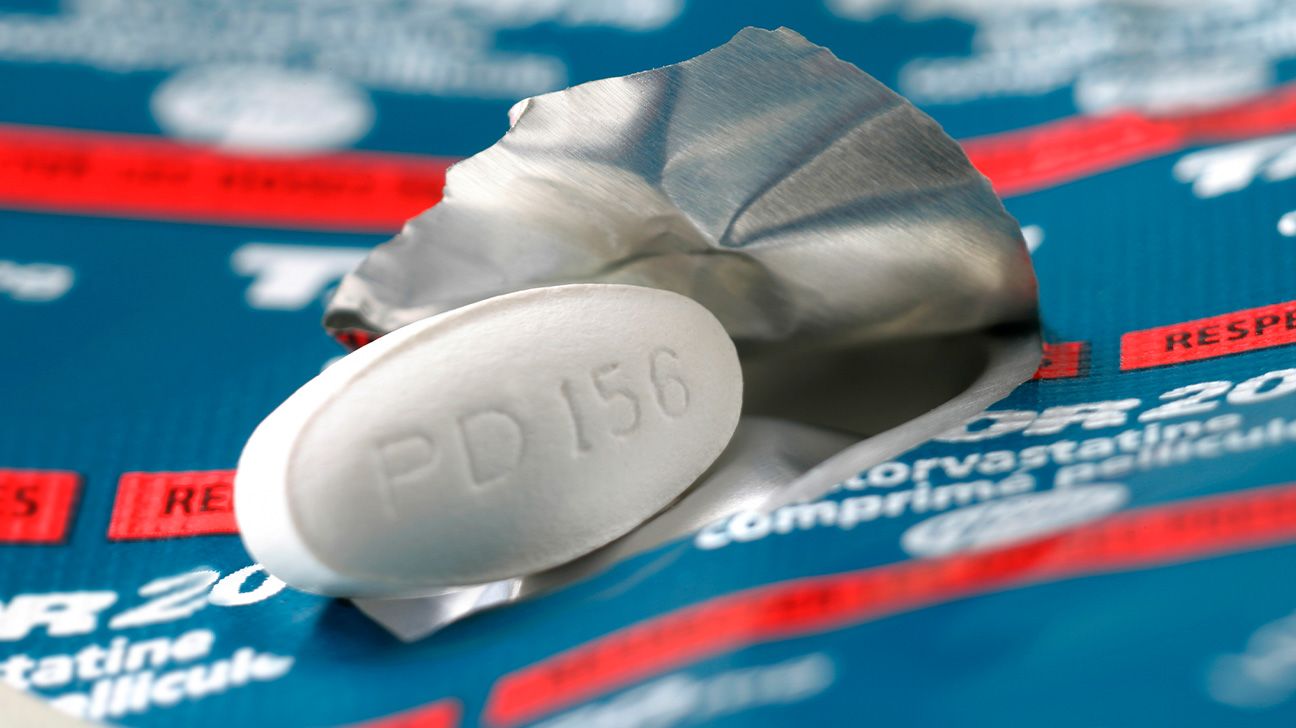
- Most statin side effects listed on drug packaging are not supported by strong evidence, a new study suggests.
- Out of 66 potential side effects, researchers only identified four that were linked to statin use.
- Statins remain broadly safe and effective, despite persistent fears and misinformation.
Take a look at the product insert for a statin and you’ll see a long list of side effects. The majority of them, a new study suggests, are likely exaggerated.
Despite their widespread use, many individuals remain unclear about what risks they actually pose. Individual concerns about side effects can lead to hesitancy in taking a prescribed statin or even discontinuing use.
To assess whether these concerns are supported by high quality evidence, researchers conducted a large meta-analysis published on February 5 in
The study, which is the result of a global research initiative known as the Cholesterol Treatment Trialists’ (CTT) Collaboration, appears to refute many of those claims. Researchers did not find evidence to support the vast majority of side effects reportedly linked to statins.
In fact, out of 66 side effects investigated, only four were found to be attributable to statins. The findings suggest that most reported side effects may not be caused by the drugs themselves.
Rigved Tadwalkar, MD, consultative cardiologist and director of Digital Transformation Pacific Heart Institute in Santa Monica, CA, told Healthline that the findings should be reassuring for individuals and doctors alike. He wasn’t involved in the research.
“What this study adds is clarity, confirming that the real risks are limited and well defined, while many widely cited concerns don’t hold up when tested rigorously. It reinforces that, for appropriately selected patients, the benefits of statins overwhelmingly outweigh the risks,” Tadwalkar said.
Potential side effects are clearly printed on the package insert for medications.
However, drugs often carry warnings for side effects, which are known in the industry as “adverse reactions,” even though there may not be a demonstrated causal link between them and the drug.
Drug labels are designed to be transparent about potential side effects, not to convey specifics about risk.
“Anything that happens to a patient while they are taking the drug during a study has to be listed, from common colds to stubbed toes to auto accidents,” said Donald Lloyd-Jones, MD, past president of the American Heart Association (AHA), and section chief of preventive medicine at Boston University School of Medicine. He wasn’t involved in the research.
“But just because these things happened, it does not mean that they were attributable to, much less caused by, exposure to the drug,” he told Healthline.
Although the drug labels for statins may include an extensive range of these reported side effects, there may be limited evidence to support them.
The study authors took a rigorous approach to investigating these adverse reactions by limiting their review to double-blind randomized controlled trials, widely considered the “gold standard” for minimizing bias and assessing causal relationships.
The analysis included 23 trials and more than 150,000 participants. Participants skewed older and male. The average age was 63 years, and 72% were men.
Almost half of the study population had some form of existing cardiovascular disease, while nearly 1 in 5 had diabetes. This sort of high risk profile is typical among people who are commonly prescribed statins.
Most trials compared a statin with a placebo, but a few compared high- and low intensity statin regimens.
Four verified side effects of statins
Researchers examined 66 side effects across multiple organ systems. These included, but were not limited to:
Across all those potential outcomes, only four were attributed to statin use.
The four verified adverse outcomes were:
- Abnormal liver transaminases — an indication that the liver is under stress
- Other liver function abnormalities — signs that the liver may be impaired
- Altered urinary composition — a possible indicator of kidney abnormalities
- Edema — fluid buildup, most commonly in the ankles, feet, and legs
Lloyd-Jones stressed that the identified side effects are uncommon and manageable.
“All of these are mild, all are easily managed clinically if they occur, and all are dwarfed by the benefit,” Lloyd-Jones noted.
“The other important thing to note about the study is that in the main results, they are reporting relative risks, which may seem high for some things, but the actual absolute event rates are low. These are all uncommon issues,” he added.
Yu-Ming Ni, MD, board certified cardiologist and lipidologist at MemorialCare Heart and Vascular Institute at Orange Coast Medical Center in Fountain Valley, CA, said that statins are generally safe, but not without some side effects. He wasn’t involved in the research.
“Statins have been studied for decades, and they have been shown to be effective for preventing a heart event, such as a heart attack or a stroke,” he told Healthline, “I find that the majority of my patients will tolerate a statin.”
In addition to the four side effects identified in the study, two were excluded by the researchers because they were investigated separately.
In a
Lloyd-Jones called muscle symptoms due to statins “overblown.”
“When studied carefully, only about 5% of people have muscle aches that can be attributed to statins, and again, these are easily managed in almost all with dose reductions or changing to a different drug,” Lloyd-Jones said.
He noted that rhabdomyolysis, a rare but serious complication leading to muscle tissue breakdown and potential kidney damage, is possible, but largely avoidable.
In a separate
“We have known that statins may increase the risk for diagnosis of type 2 diabetes for some time. However, while there is a mechanism for why statins may increase blood sugar slightly in a small minority of patients, no one with a normal blood sugar gets type 2 diabetes from being put on a statin,” said Lloyd-Jones.
The bottom line: like all medications, statins do have some side effects, but in this case, the benefits generally far outweigh them.
“Statins are far safer than their reputation suggests, and for many people, they are lifesaving. This study shows that most feared side effects are not supported by strong evidence,” Tadwalkar said.
At the same time, he acknowledged it is the job of clinicians to help dispel medical misinformation and aid patients in making informed care decisions.
“This is a reminder for clinicians to ground conversations in the strongest evidence we have. Honesty and context are essential. Clinicians should clearly acknowledge the side effects that are real, explain how common they actually are, and, just as importantly, contrast them with the very real risks of untreated cardiovascular disease,” Tadwalkar said.
