



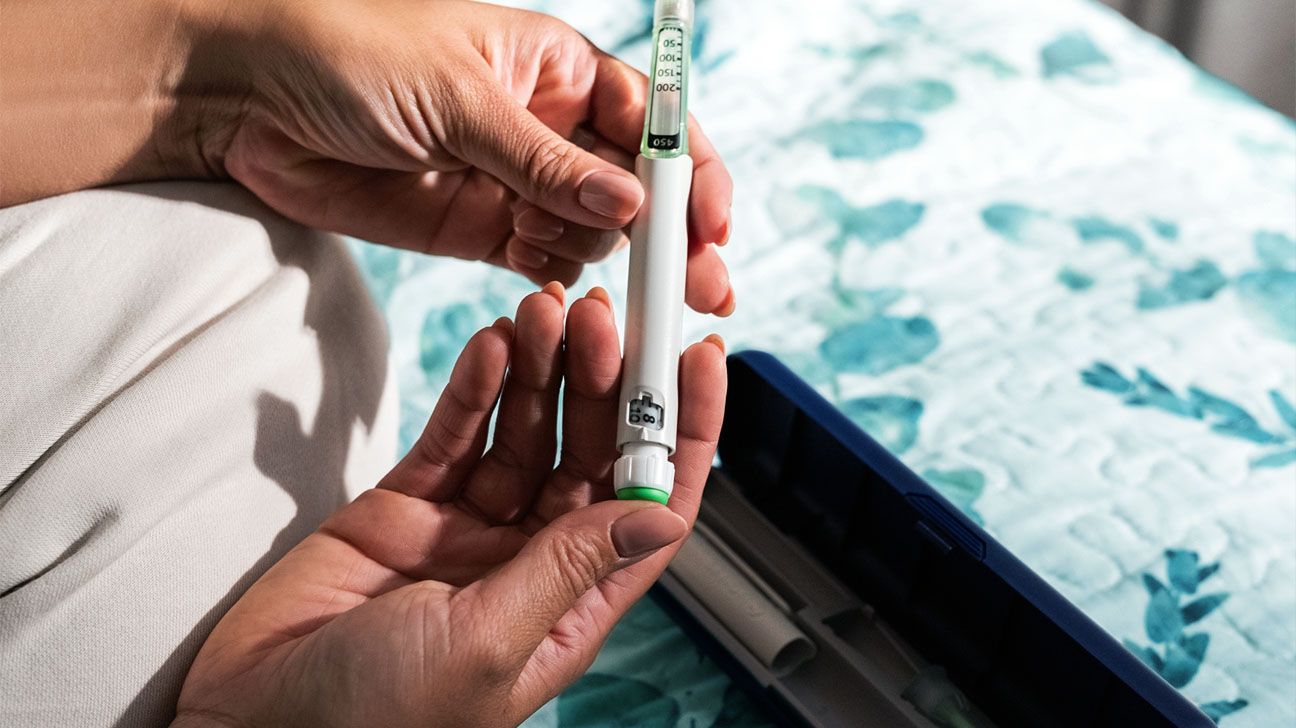
- New guidelines from the World Health Organization (WHO) recommend using GLP-1 medications to help manage obesity.
- The agency said the weight-loss drugs should be used in conjunction with a healthy diet and regular exercise.
- Experts say the official recommendation reemphasizes the game-changing ability of GLP-1 medications, but stress that diet and exercise are integral to an effective treatment plan for obesity.
The World Health Organization (WHO) has recommended the use of GLP-1 medications as part of treatment programs to help people manage obesity.
In a new guideline published in
“Obesity is a chronic, relapsing disease affecting over 1 billion people worldwide, driving substantial morbidity, mortality, and economic burden. Glucagon-like peptide-1 therapies (GLP-1 therapies) provide clinically meaningful weight loss and broad metabolic benefits,” the WHO officials wrote.
WHO encouraged countries to develop comprehensive programs that tackle the obesity crisis in a multi-factorial way.
“Medication alone cannot solve the global obesity burden. The availability of GLP-1 therapies should galvanize the global community to build a fair, integrated, and sustainable obesity ecosystem,” the officials wrote.
In September, the organization
The agency’s new guidelines are “conditional,” meaning the benefits likely outweigh the downsides. WHO officials emphasized the need for more long-term data on the drugs’ safety and efficacy, as well as lower prices to facilitate broader access.
Mir Ali, MD, a general surgeon, bariatric surgeon, and medical director of MemorialCare Surgical Weight Loss Center at Orange Coast Medical Center in California, said that the new guidelines send a strong message.
“The WHO announcement is important as it is recognizing obesity as a worldwide health concern and addressing it as a chronic disease with treatment options that include medications,” Ali told Healthline. “The hopes are that this announcement may spur pharmaceutical companies to make this drug less expensive and available to a larger patient population.”
Kristin Kirkpatrick, the president of KAK Consulting LLC and a dietitian at the Cleveland Clinic Department of Wellness & Preventive Medicine in Ohio, said the WHO guidelines bring a noted change in the approach to weight management.
“This marks a shift in suggesting that diet/exercise alone is appropriate for everyone who is attempting to lose weight,” she told Healthline. “It recognizes that medication and, in this case, a GLP-1 (alongside dietary and other lifestyle changes) can be a more sustainable solution.”
Anil Makam, MD, an associate professor of medicine at the University of California, San Francisco, agreed that GLP-1 drugs are game changers.
“GLP-1 medications are the first truly effective class of drugs we’ve ever had to treat obesity,” he told Healthline.
However, Makam said the WHO guidelines may have actually undersold the benefits of these weight loss drugs.
“Clinical trials show GLP-1s produce powerful and consistent weight loss and major improvements in obesity-related illnesses — especially for people at high cardiovascular risk,” he said. “That evidence is strong, not ‘conditional.’”
However, Dan Azagury, MD, an associate professor of surgery at Stanford University in California, said the guidelines are useful but not earth-shattering.
“Any WHO guideline is important, in particular internationally, and this one is a welcome and important one,” he told Healthline. “That being said, the recommendation itself does not introduce any groundbreaking or substantial new information.”
David Cutler, MD, a family medicine physician at Providence Saint John’s Health Center in Santa Monica, California, said he feels the most important emphasis from the guidelines is not necessarily the GLP-1 medications.
“The most important thing is it sends a message about obesity and its harmful effects on health,” Cutler told Healthline.
Kirkpatrick says there is no question that GLP-1 drugs can help some people manage their weight.
“These drugs are shown to help in reduction of food intake, modification of cravings that may lead to healthier food choices (less sugar, less ultra-processed foods, less alcohol), and what my patients tell me – ‘quieting the food noise,’” she said.
Experts, however, say cost and lack of access to these medications are also important topics.
“High costs, limited production capacity, and supply-chain constraints remain major barriers to universal access to GLP-1 therapies,” said Azagury. “Access to treatment is a significant challenge for patients in many countries, constituting the primary obstacle to delivering high-quality care for this underserved condition.”
“Many challenges remain, especially in developing countries where access to care can be even more difficult. Cost, availability, access to counseling and other treatments are still hurdles to overcome,” he said.
Makam added that access is a key issue, but he says the potential is enormous if the drugs become more available.
“If these medications become affordable and widely available, they can meaningfully reduce obesity rates,” he said. “We’re already seeing obesity rates decline in the U.S. for the first time in decades. These drugs are that effective — if access and cost barriers come down.”
There are two types of medications among the newer GLP-1 drugs.
One type is medications that contain the active ingredient tirzepatide. These include drugs with the brand names Mounjaro and Zepbound.
The other type is medications that contain the active ingredient semaglutide. These include drugs with the brand names Ozempic and Wegovy.
They all work by mimicking a hormone that sends fullness signals to the brain.
Makam said he believes WHO officials made a mistake when they lumped all GLP-1 drugs together in their guidance.
“They treated all GLP-1 medications as the same. They’re not. Dual-action drugs like tirzepatide are clearly the most effective — and, yes, also the most expensive. Grouping all GLP-1s together blurs an important difference for policymakers,” he said.
Research has shown that the weight loss achieved with these medications, combined with a healthy diet and regular exercise, can result in a range of health benefits.
A 2023 study reported that GLP-1 drugs may help reduce cancer risks.
An August study reported that the weight loss medications can reduce the risk of hospitalization as well as early death in people with a common type of heart failure.
Other recent research suggests that GLP-1s could potentially be used to even treat addiction and curb alcohol use.
The Centers for Disease Control and Prevention (CDC)
The CDC states that obesity is a “chronic condition that increases the risk of hypertension, type 2 diabetes, coronary heart disease, stroke, and certain cancers.”
Obesity is also associated with higher risks of elevated blood pressure, sleep apnea, liver disease, gallbladder disease, pregnancy complications, and depression.
One of the primary causes of obesity is an unhealthy diet, specifically consuming more calories than the body burns. Other factors include:
- genetics
- lack of sleep
- stress
- older age
Makam said the foundation of any weight loss program should be a balanced diet with a heavy emphasis on plant-based foods and smaller portions.
He added that weight-loss drugs can only do so much.
“For people with morbid obesity, GLP-1 medications can be transformative,” he said. “But it’s crucial to know that the weight often comes back when you stop. These medications work with slow and careful dosing adjustments, but they require long-term use.”
Cutler noted that although GLP-1 drugs are “the safest and most effective medications available” to treat obesity, they do come with side effects.
He said it’s better for people to try to lose weight through diet and exercise and only utilize the medications if those efforts don’t succeed.
“You should try to do it without medications and if you can’t do it, then try the medications,” Cutler said. “Losing weight through diet and exercise isn’t easy. It takes some work and it takes some time.”
Azagury added that professional help is another important ingredient.
“Treatments exist, and multidisciplinary longitudinal care is essential for managing a lifelong chronic condition,” he said. “Being treated in a center that offers multimodal therapy —including behavioral and nutritional therapy, medications, and surgery — is the best way for patients to receive the comprehensive support they need.”
“Working with someone can ensure that you are going beyond just taking the drug and working on your dietary pattern, supplements, exercise, etc., as well as monitoring dose and any associated risk factors,” she said.
“I tell patients, whether they are having surgical weight loss, medications, counseling or a combination of these therapies, these are all tools to help someone change to a healthier diet and lifestyle,” added Ali. “It does require effort and compliance on the part of the patient. If the patient does not follow diet and lifestyle recommendations, long-term success is typically much lower.”
