



Editor’s note: This is the fourth article in a series of stories profiling medtech companies that are changing the field of robotic surgery. You can read the first three stories here, here and here.
XCath is developing a robot-assisted approach to brain aneurysm treatment that could bring greater precision to procedures and enable more physicians to perform them.
A cerebral aneurysm is a bulge in a weakened area of an artery in the brain. To prevent a life-threatening rupture of the vessel wall, endovascular interventions that access the aneurysm from inside the artery are increasingly preferred over traditional open surgery.
While less invasive than open surgical repair, the intricate procedures are not free from complications and require significant technical skills to perform. A global shortage of neurointerventionists with expertise to perform the procedures has raised concerns about limited patient access to critical stroke care.
XCath, a Houston-based startup, is working on a robotic system that it expects to standardize endovascular brain aneurysm treatment. The goal is to facilitate consistent performance among a wider field of physicians, minimize complications and improve clinical outcomes.
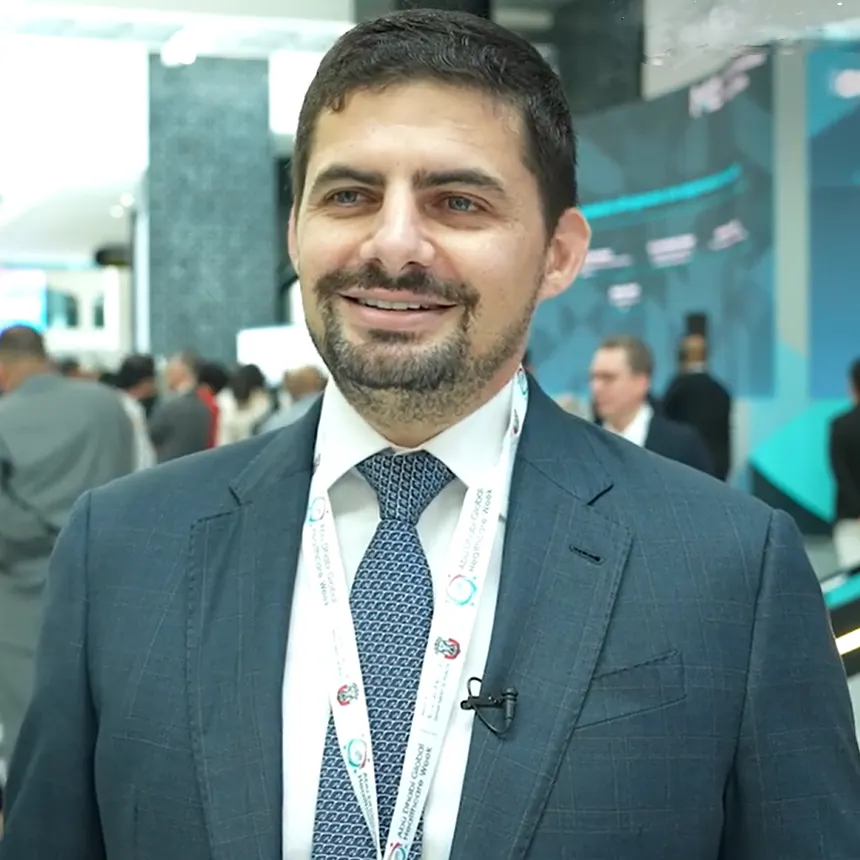
Eduardo Fonseca, CEO of XCath
Permission granted by XCath
“Bringing precision that the very top neurointerventionists have — and seeing them work is obviously art — bringing that and standardizing that” is XCath’s mission, said CEO Eduardo Fonseca.
Ruptured brain aneurysms, which can lead to hemorrhagic stroke, cause almost 500,000 deaths worldwide each year, according to the Brain Aneurysm Foundation. About half of brain aneurysm ruptures are fatal. For the patients who survive, about two-thirds suffer some permanent neurological deficit.
“As humanity, we should be able to do more for these patients,” said Fonseca.
XCath, spun out of UTHealth’s Microsurgical Robotics Laboratory in 2017, sees its robotic surgery system as part of the solution. “The foundational thesis is very much, robotics, in order for it to be accepted, has to improve clinical outcomes,” Fonseca said.
The company’s investors include CE-Ventures and Intuitive Surgical co-founder Fred Moll, who is chairman of XCath’s board of directors.
Last month, XCath announced that its EVR robotic system was used to treat three patients with complex brain aneurysms in Panama.
“The successful completion of these procedures marks a significant milestone in the world of endovascular robotics as we seek to improve outcomes for patients impacted by aneurysms and strokes,” Moll said in a company statement.
The operations marked XCath’s first in-human procedures and only the second time a surgical robot has been used in an intracranial neurovascular intervention. In 2019, Siemens Healthineers’ Corindus business reported the first robot-assisted aneurysm treatment was performed.
Bridging the skills gap
Toronto-based neurosurgeon Vitor Mendes Pereira, who performed the XCath procedures at The Panama Clinic in Panama City, said robotic endovascular aneurysm repair supports consistency among surgeons with different skill sets. The treatment involves placing an implant such as a stent in the artery to stop blood flow to the aneurysm and reduce the risk of rupture.
In the cases he completed with the XCath robot, Pereira used flow diverting stents and intrasaccular devices made by different device manufacturers.
“Robotics can reduce the gap between experience levels or training on a specific technology,” Pereira said.
XCath’s robot also has the potential to transform access to care for acute stroke, Pereira said. With the system, the surgeon works in a separate room from the patient. The ability to remotely control the robot opens the possibility of deploying the system in a hospital that is far from where stroke patients would normally have to travel to receive the appropriate care.
“With the remote robotic technology, we actually can have the care close to where the patient lives, thus reducing the time to treatment,” said the doctor.
Pereira described positive results with the XCath system. “For me, it was a great experience,” he said. “I was very happy with the technology and the precision it provided to me during the procedure.”
“What we want to do is telerobotically take the treatment to the patient, as opposed to the patient to the treatment.”

Eduardo Fonseca
CEO of XCath
The case for telesurgery
While XCath is starting with aneurysm repair, it also plans to develop capabilities to support mechanical thrombectomy for stroke treatment.
“Stroke is incredibly time sensitive,” said Fonseca. After a person is diagnosed, the patient must be transferred to a center that can provide the treatment needed.
“There is a lot of time lost in that period,” the CEO said. “What we want to do is telerobotically take the treatment to the patient, as opposed to the patient to the treatment.”
XCath is preparing to conduct a clinical trial for its brain aneurysm procedure while ramping up to provide evidence that robotic stroke treatment can be done clinically, Fonseca said, without disclosing a timeline.
“This, in my view, will be the first time that a robot, very tangibly, is able to save a life,” said Fonseca. “I think that leap and that evolution of humanity into robotics — robots essentially being angels and helping save lives — is around the corner.”
