



What You Should Know:
– Ceribell, Inc. has secured FDA 510(k) clearance for the world’s first continuous, AI-powered delirium monitoring solution, expanding its existing EEG platform beyond seizure detection.
– The technology addresses a massive gap in critical care, providing objective, real-time tracking for a condition that affects up to 80% of ventilated patients and is often missed by manual assessments. The clearance positions Ceribell to significantly improve ICU outcomes by reducing the mortality and long-term cognitive risks associated with untreated delirium.
The “Vital Sign for the Brain”
For decades, the diagnosis of delirium in the Intensive Care Unit (ICU) has been a subjective, manual, and often missed process. Today, that paradigm shifts. Ceribell, a leader in point-of-care neurology, announced that the FDA has granted 510(k) clearance for its proprietary delirium monitoring solution—the first device of its kind to receive such regulatory approval.
The FDA clearance transforms the Ceribell System from a seizure-detection tool into a broader AI-powered brain monitoring platform. By continuously analyzing EEG signals for patterns associated with delirium, the system promises to give clinicians an objective “check engine light” for the brain, potentially saving billions in healthcare costs and preventing long-term cognitive decline in millions of patients.
Solving the “Silent” Crisis in the ICU
Delirium is often described as the “silent epidemic” of critical care. It affects approximately 31% of all ICU patients and up to 80% of those on mechanical ventilation. The costs—both human and financial—are staggering. Every day that delirium persists, a patient’s six-month mortality risk rises by 10%. Furthermore, survivors face a 60% higher risk of developing post-ICU dementia.
Despite these stakes, detection has historically been difficult. Hypoactive delirium, where a patient is quiet and withdrawn rather than agitated, often goes unrecognized by busy nursing staff using manual assessment tools.
“Current detection methods rely on intermittent, labor-intensive bedside assessments that are subject to human variability,” said Dr. Juliana Barr, professor emerita at Stanford University School of Medicine. “Ceribell offers a reliable continuous monitoring solution that has the potential to improve delirium detection rates and management.”
How the Technology Works
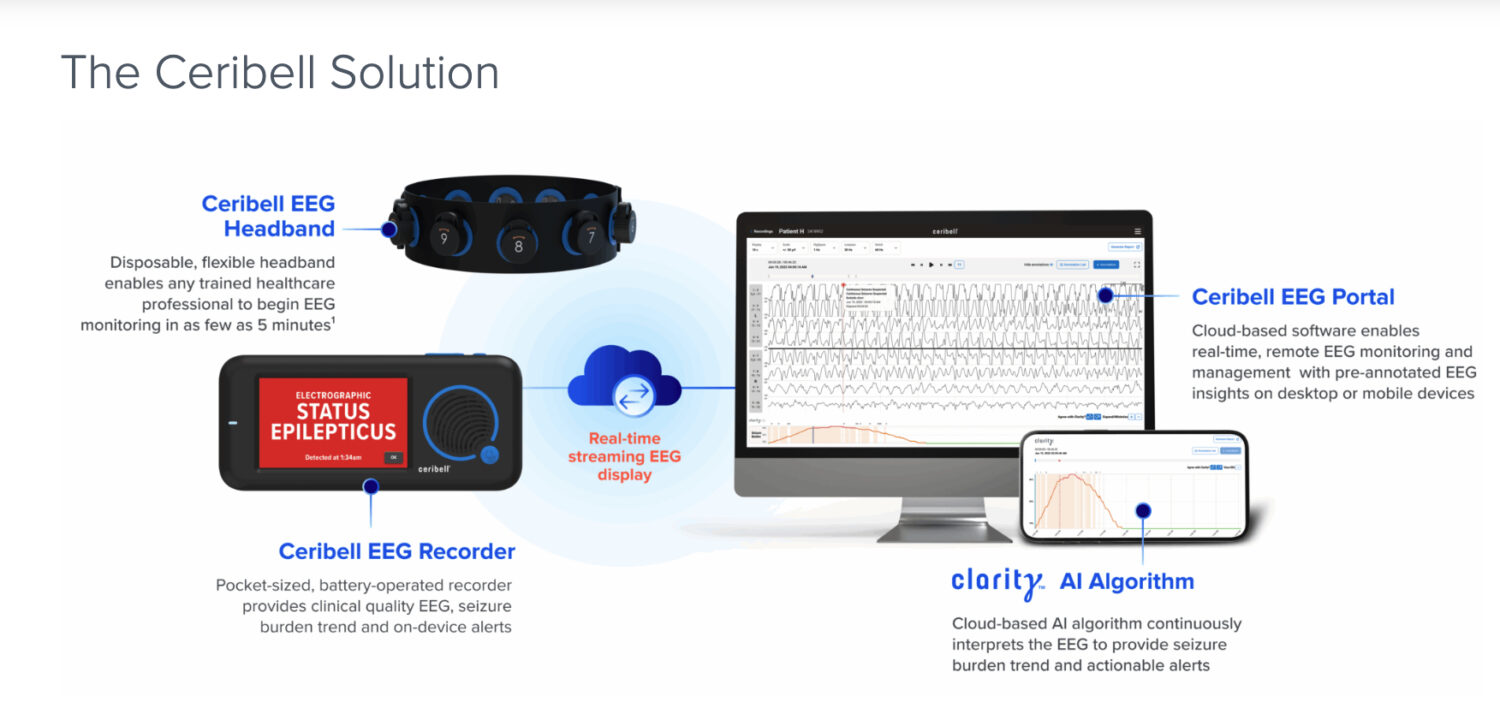
Ceribell’s solution leverages the company’s existing headband EEG hardware but applies a new, rigorous algorithmic layer. The AI continuously analyzes EEG segments to identify brain patterns associated with delirium. When these patterns are detected, the system notifies clinicians, enabling timely intervention.
This “always-on” approach removes the subjectivity of the clipboard and provides an objective, neurological vital sign at the bedside. The algorithm was validated through prospective studies involving 225 adults in critical care environments, confirming its reliability in real-world high-acuity settings.
The Intersection of Seizures and Delirium
The strategic value of this clearance lies in the clinical overlap between the conditions Ceribell now monitors. Research indicates that roughly 48% of ICU patients experiencing seizures also have peri-ictal delirium. By combining advanced seizure detection with delirium monitoring, Ceribell is giving clinicians a unified view of the patient’s neurological status, allowing for faster, more accurate decision-making.
“Delirium has been under-recognized and under-treated in critically ill patients for far too long,” said Jane Chao, Ph.D., co-founder and CEO of Ceribell. “This is another big step towards our mission of making EEG a new vital sign for better brain care.”
The Path Forward
Following this clearance, Ceribell is moving quickly to operationalize the technology. The company has submitted a New Technology Add-on Payment (NTAP) application to the Centers for Medicare and Medicaid Services (CMS), a critical step in ensuring hospitals are reimbursed for adopting this new standard of care.
