



What You Should Know:
– Lunit has announced a collaboration with pharmaceutical giant Daiichi Sankyo to integrate its AI-powered Lunit SCOPE digital pathology products into two of Daiichi Sankyo’s oncology pipeline programs.
– The partnership will utilize Lunit’s SCOPE uIHC and SCOPE IO solutions to analyze pathology slides for quantitative data and immune phenotyping, aiming to discover novel biomarkers and improve patient stratification for clinical trials. This move underscores the growing role of AI in accelerating translational research and enabling more precise, data-driven drug development.
From Slides to Insights: Lunit and Daiichi Sankyo Bet on AI to Refine Oncology R&D
For decades, pathology has been a discipline of visual pattern recognition—highly skilled experts looking at slides under a microscope. But in the era of precision medicine, the human eye alone cannot quantify the complex data hidden within the tumor microenvironment. Today, Lunit (KRX:328130) announced a collaboration with Daiichi Sankyo (TSE: 4568) that aims to bridge this gap, deploying AI to turn tissue samples into actionable data for drug development.
The partnership focuses on integrating Lunit’s SCOPE digital pathology suite into two of Daiichi Sankyo’s oncology pipeline programs. This is not merely a vendor agreement; it represents a strategic shift toward using computational pathology to “de-risk” clinical trials by better understanding which patients are most likely to respond to experimental therapies.
The Tech Stack: SCOPE uIHC and IO
At the heart of the deal are two specific AI tools:
- SCOPE uIHC: Designed for quantitative immunohistochemistry (IHC) analysis. This tool automates the quantification of protein expression, reducing the variability inherent in manual scoring.
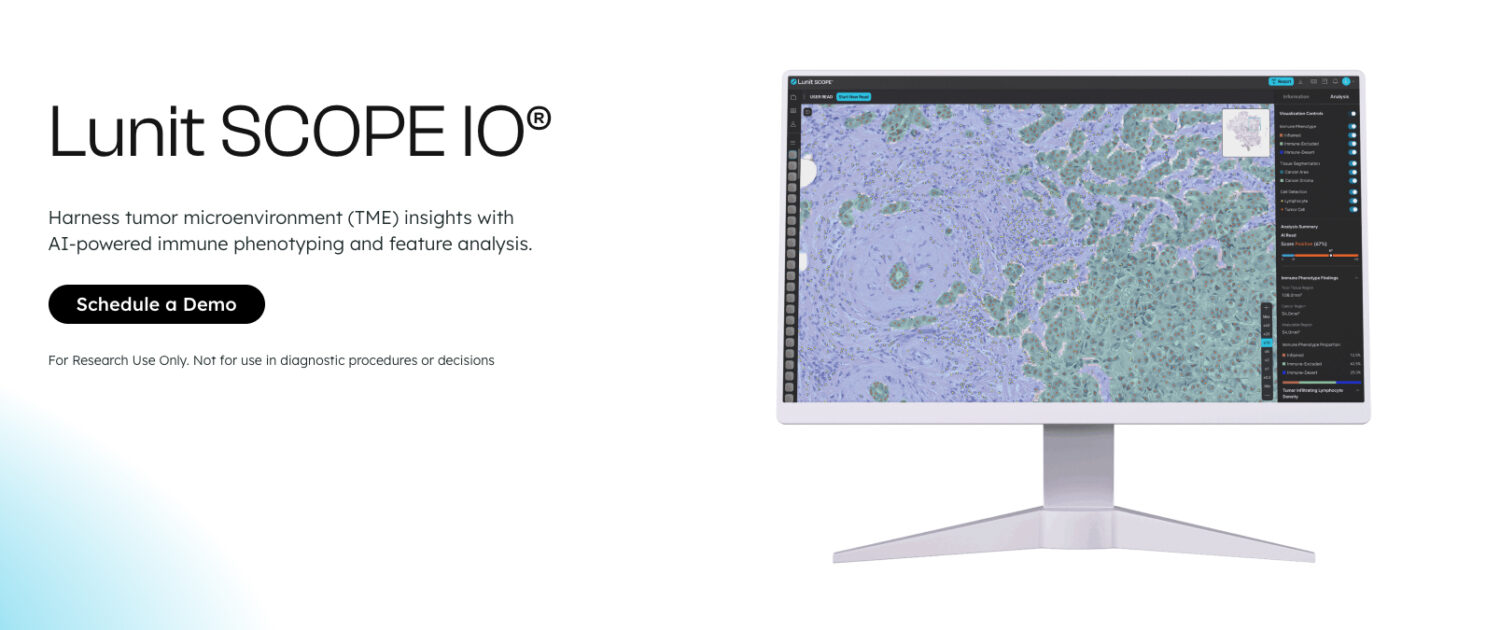
- SCOPE IO: Focused on immune phenotyping and spatial analysis. This tool maps the tumor microenvironment, identifying the spatial relationship between immune cells and cancer cells—a critical factor in predicting responses to immunotherapies.
“Lunit SCOPE was built to unlock hidden insights from pathology slides—quantifying the tumor microenvironment, predicting molecular profiles and generating data-rich features to inform trial design,” said Brandon Suh, CEO of Lunit.
Optimizing Translational Research
The collaboration will span exploratory research projects across multiple cancer types. By applying these AI models, Daiichi Sankyo aims to identify novel biomarkers that might otherwise go unnoticed.
In the high-stakes world of oncology R&D, where the failure rate for new drugs is notoriously high, this kind of data enrichment is invaluable. It allows researchers to potentially “enrich” clinical trials—selecting patients based on a precise biomarker profile rather than broad clinical criteria. This stratification can lead to smaller, faster, and more successful trials.
“By working with Daiichi Sankyo, we are embedding these capabilities into translational and clinical research, enabling faster biomarker discovery and more precise patient stratification,” Suh added. “Ultimately, this means… where each patient has a greater chance of receiving the therapy that works best for them.”
