



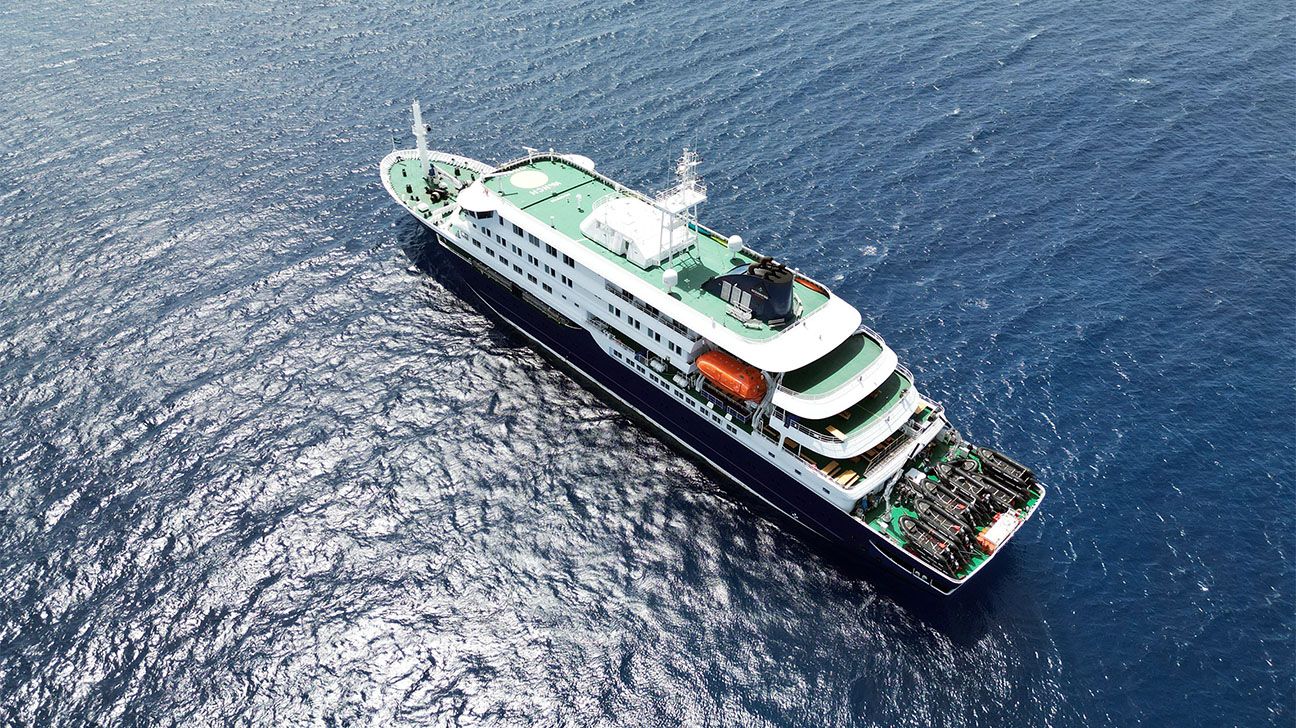
- A cluster of three deaths among cruise ship passengers has raised concerns about a deadly hantavirus outbreak aboard a cruise ship in the Atlantic Ocean.
- A suspected 7 cases have been identified as investigators are working to determine whether the deaths are linked to hantavirus.
- The World Health Organization (WHO) maintains that the risk to the general public is low.
Three people have died and several others have fallen ill aboard a Dutch cruise ship in what appears to be a deadly hantavirus outbreak.
The MV Hondius, a cruise liner operated by Oceanwide Expeditions, is currently located in the waters near Praia, Cape Verde, a small archipelago in the Atlantic Ocean off the coast of West Africa. Officials in Cape Verde have refused to allow the ship to dock over fears that the suspected outbreak might spread to shore.
A married Dutch couple and a German national who were passengers on the ship have died. A British national aboard the ship was evacuated and is being treated in South Africa. That passenger was the first to be diagnosed with hantavirus infection.
The World Health Organization (WHO) reports that
The WHO, which is managing the outbreak, maintains that the risk to the general public is low.
Hantavirus cases in humans are rare. A recent case that made headlines involved the death of Betsy Arakawa, wife of acclaimed actor Gene Hackman, who was discovered dead in their New Mexico home in April 2024. While Arakawa’s cause of death was attributed to hantavirus, Hackman died of Alzheimer’s.
While hantavirus infection is uncommon, it is often fatal. The onset typically begins with nonspecific, flu-like symptoms. Infection is most often transmitted through exposure to rodents’ urine or feces. Although
Steven Bradfute, PhD, an associate professor at the University of New Mexico Health Sciences Center who specializes in hantavirus research, said the situation aboard the cruise ship was unusual.
“Usually you have isolated cases, so to hear about a cruise ship with multiple people being infected was definitely not something on our radar,” he told Healthline.
Roughly 150 people, including passengers and crew, from more than 20 nations, still remain aboard. The ship may next be bound for the islands of Las Palmas or Tenerife, farther north on the African coast, in hopes of allowing passengers to disembark and undergo medical screening.
“[We are] working closely with local and international authorities,” said Oceanwide Expeditions in a statement on May 4.
“Strict precautionary measures are in process on board, including isolation measures, hygiene protocols and medical monitoring. All passengers have been informed and are being supported. Oceanwide Expeditions is in close contact with those directly involved and their families, and is providing support where possible.”
The incubation period for hantavirus ranges from
The Dutch-flagged MV Hondius, operated by Oceanwide Expeditions, left Ushuaia, southern Argentina, in March, roughly three weeks ago, on a long expedition cruise.
Its route included several stops in the Atlantic Ocean, including Antarctica, the Falkland Islands, and Cape Verde.
A 70-year-old Dutch man died on April 11 after reportedly developing fever, headache, and abdominal pain. On April 24, his body was removed in Saint Helena, a British territory in the South Atlantic. His wife, a 69-year-old Dutch woman, also disembarked, accompanying his body for repatriation.
After disembarking, the woman began showing signs of illness during her journey home. She later died in South Africa at O. R. Tambo International Airport while attempting to return to the Netherlands.
On April 27, the same day that the Dutch woman died, a British national aboard the MV Hondius became seriously ill after the ship left St. Helena.
The passenger was subsequently transferred to South Africa and treated in Johannesburg. The patient is in critical but stable condition. This case was the first laboratory-confirmed hantavirus infection linked to the incident.
Onboard the ship, the situation continued to escalate. A German national died on May 2; details are sparse and the cause of death has not yet been established by Oceanwide Expeditions or the World Health Organization (WHO).
Two crew members, one British and one Dutch, have also reported symptoms consistent with possible hantavirus illness. One was described as mild, and the other as severe; both reportedly require urgent medical care. No other passengers with symptoms have been identified at this time.
According to Oceanwide Expeditions, evacuations of sick passengers requiring medical assistance began on May 5.
“It’s possible someone got the infection in Argentina, got on the boat, and it spread from person to person. It’s also possible that passengers on the boat got it from the rodents that were already present on the ship,” Bradfute said.
Hantavirus is part of a group of related viruses that can cause serious illness in humans. It is most commonly transmitted through exposure to the urine, droppings, or saliva of wild rodents, including mice and rats.
The virus can also spread through inhalation of contaminated dust or aerosolized particles stirred into the air, particularly in enclosed or poorly ventilated spaces.
Symptoms of hantavirus infection vary by geographic region and virus type.
‘New World’ hantavirus
In North and South America, so-called “New World” hantaviruses are most common. Early symptoms typically resemble the flu — fever, body aches, and vomiting — but can progress to a severe respiratory illness known as
In early 2024, a spate of deaths linked to HPS made headlines in the United States. Three individuals died in the rural area of Mammoth Lakes, CA.
“In the United States, the principal pathogen is Sin Nombre virus, the most common cause of hantavirus pulmonary syndrome (HPS),” said Robert Glatter, MD, attending physician in the Department of Emergency Medicine at Lenox Hill Hospital in New York City, and assistant professor of Emergency Medicine at Zucker School of Medicine at Hofstra/ Northwell.
“Exposure is classically linked to infected deer mice and to aerosolized rodent urine, droppings, saliva, or nesting material. U.S. cases remain concentrated in the western states, especially west of the Mississippi River, although sporadic cases occur elsewhere,” Glatter told Healthline.
HPS affects the lungs, causing fluid buildup that makes breathing difficult. As oxygen levels drop, other organ systems can begin to fail.
“The clinical presentation of HPS is deceptive at onset,” Glatter said.
“Patients usually begin with a short febrile prodrome marked by fever, myalgias, malaise, headache, and often gastrointestinal symptoms. What makes hantavirus dangerous is the potential for abrupt progression over the next several days to cough, shortness of breath, noncardiogenic pulmonary edema, shock, and rapid respiratory failure,” he continued.
Early warning signs of hantavirus may include low platelet counts, dehydration, high white blood counts, and mild elevation of liver enzymes, Glatter explained.
‘Old World’ hantavirus
“Severe ‘Old World’ viruses such as Hantaan and Dobrava can carry materially higher fatality than milder viruses such as Puumala or often Seoul virus, whereas New World HPS viruses in the Americas can have fatality in the 30–40% range, and sometimes higher in specific South American outbreaks,” Glatter said.
There are no approved vaccines or therapeutics available to treat HPS.
Instead, the disease is treated through supportive care, primarily supplying the blood with oxygen.
Despite the alarming reputation of hantavirus, Bradfute emphasizes that infection is both preventable and rare.
“Panicking is not a good thing to do. We haven’t had huge hantavirus outbreaks like flu or COVID because these viruses just don’t transmit well,” Bradfute said.
“Most hantaviruses are not spread person-to-person,” Glatter said. “CDC cruise guidance and reporting materials support that cruise-related public health reporting focuses mainly on gastrointestinal and respiratory illness and death reporting, not hantavirus as a typical onboard transmissible risk,” he noted.
