



What You Should Know
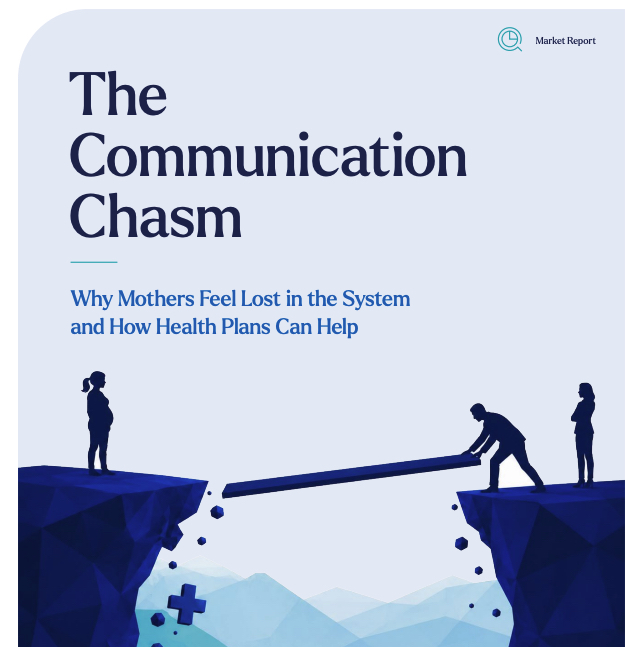
- Healthcare growth advisory firm Sage Growth Partners has published The Communication Chasm: Why Mothers Feel Lost in the System and How Health Plans Can Help, the second installment in its State of Maternal & NICU Care 2026 research series.
- Independent survey data from 300 recently pregnant women and 50 health plan executives exposes a profound care deficit: while 53% of mothers receive automated text reminders, only 28% find them valuable.
- Structural comprehension of insurance remains highly fragmented, with 56% of new mothers unable to fully understand their clinical care plans and 38% failing to comprehend the literal duration of their postpartum coverage limits.
- Perinatal care delivery undergoes a severe quality drop-off over time: 80% of mothers rate their prenatal care as good-to-excellent, but that metric plummets to 45% for post-NICU discharge care, pointing to a major “fourth trimester” failure.
- Payer operations are facing intense fiscal pressure, with 100% of health plans reporting financial strain on maternal/NICU programs, prompting 76% of leaders to plan strategic investments in high-touch digital care navigation and scorecards.
The managed care operation, Medicaid service line, and digital population health procurement landscapes are facing a critical structural challenge. Over the past half-decade, payers and enterprise health plans aggressively expanded their virtual care footprints, launched targeted maternal wellness programs, and deployed automated text-based notification loops.
The primary operational theory assumed that increasing the raw volume of communication check-ins would automatically translate into higher patient compliance, better maternal health outcomes, and a reduction in high-cost neonatal intensive care unit (NICU) admissions.
However, a landmark market study from Sage Growth Partners completely dismantles this strategy. Published as part of their State of Maternal & NICU Care 2026 research series, the report—titled The Communication Chasm: Why Mothers Feel Lost in the System and How Health Plans Can Help—reveals that more communication does not mean better communication.
By analyzing surveys from 300 recently pregnant women and 50 healthcare insurance leaders, the data reveals an acute Patient-Payer disconnect: health plans are spending millions to push out automated information that their members can neither understand nor utilize effectively.
Deconstructing the Comprehension Deficit: The Postpartum Chasm
The overarching data shows a startling gap between a plan’s operational intent and a mother’s actual understanding. Only 4% of surveyed health plan executives believe their members understand their maternity and postpartum benefits “very well,” while 56% of new mothers explicitly state they do not fully understand their care plans.
This systemic confusion acts as a direct barrier to seeking essential care, often proving a larger obstacle to care acquisition than localized provider shortages. This dynamic fosters a state of “coverage without care,” where women routinely delay or avoid necessary postpartum care because they cannot understand or calculate their out-of-pocket exposure.
This structural confusion is heavily driven by the shifting regulatory dynamics of Medicaid programs, which covered nearly 69% of the surveyed patient cohort. While Medicaid traditionally waives cost-sharing for direct, pregnancy-related care, many new mothers are left completely unaware that non-pregnancy services can carry complex copays and deductibles.
Furthermore, federal policy shifts around eligibility redeterminations have introduced massive coverage instability, leaving mothers blind to exactly when their postpartum safety net expires.
The 5 Hardest Aspects of Maternity Coverage for Patients to Understand
Duration of Postpartum Coverage (38%): Massive confusion regarding the “fourth trimester” timeline and post-birth eligibility cliffs.
Scope of Covered Services (37%): Inability to distinguish between pregnancy-exempt services and standard medical billing.
Copays and Deductibles (30%): Complete lack of transparent upfront cost communication from the health plan.
Provider Network Limitations (29%): Constrained visibility into which local systems or midsize networks actively accept their plan.
Pre-Admission Approval Paths (21%): High administrative friction surrounding mandatory labor and delivery approvals.
Quality Regression: The Fourth Trimester Systemic Failure
The Sage Growth Partners research highlights a severe trajectory breakdown as a mother progresses through her perinatal journey. While nearly 80% of surveyed mothers report receiving good-to-excellent prenatal care during the early stages of pregnancy, only 37% rate their postpartum care as excellent, and just 29% give a high rating to their care and communication following a NICU discharge.
This rapid decline in patient experience points directly to a systemic neglect of the “fourth trimester”—the crucial three-month window following delivery that plays a disproportionate role in long-term maternal and infant mortality rates. Because traditional health plan resources are predominantly reactive rather than proactive, mothers are often left completely unmanaged once they leave the delivery ward.
In fact, 12% of surveyed mothers received absolutely no support or coordination after hospital discharge, resulting in 41% of new moms feeling less than fully confident taking their babies home.
This deficit is intensified by a complete failure to deliver culturally relevant, language-conforming resources: 36% of new mothers did not receive health plan communications in their preferred language, leaving them unable to effectively advocate for themselves or identify critical medical warning signs, such as postpartum depression.
Shifting Payer Priorities: Care Management as a Fiscal Imperative
This operational fragmentation is playing out against an environment of intense financial strain. 100% of surveyed health plan leaders report facing financial pressures on their maternal and NICU care programs, with 14% characterizing these pressures as extremely significant strategic challenges.
To protect operating margins from skyrocketing inpatient delivery costs and extended NICU lengths of stay, 68% of payer executives rank member engagement and care navigation as their top priority over the next 24 months.
To achieve better outcomes with compressed budgets, 76% of health plan leaders are planning immediate investments in high-touch care management and digital care navigation platforms. Payers recognize that early, upstream intervention during the first trimester is the single most effective lever to prevent premature births and control downstream NICU expenses.
Furthermore, 60% of health plans are actively using a formal maternal or perinatal scorecard to track these populations. However, only 31% currently leverage external digital partners to manage these scorecards.
By partnering with specialized digital navigation solutions, health plans can leverage advanced metrics and real-time KPIs to identify gaps in member utilization accurately, flag high-risk pregnancies sooner, and continuously adjust outreach workflows before minor clinical shifts escalate into high-cost emergency room presentations.
In an era defined by severe technical clinician shortages, skyrocketing uncompensated care liabilities, and strict federal and state regulatory focus on outcomes-driven value-based care coordination, the future belongs exclusively to technology partners that can seamlessly transform raw data fragmentation into an automated, auditable, and entirely secure system of lifelong human care
