



What You Should Know
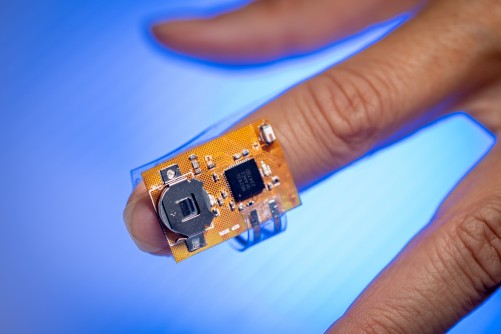
- Engineers and neuroscientists at UC San Diego have developed a soft, sweat-powered fingertip patch that continuously monitors levodopa levels in patients with Parkinson’s disease without requiring external batteries or blood draws.
- Features a specially engineered absorbent gel packed with salts and benign solvents that passively draws sweat from the fingertip’s dense network of sweat glands via osmosis.
- Embedded enzymes react with levodopa in sweat to generate both the electric voltage that powers the device and real-time concentration readouts matching standard laboratory blood tests.
- Clinical tests revealed that individuals with Parkinson’s clear levodopa significantly faster than healthy controls, explaining sudden, severe symptom deterioration and dangerous dosing gaps.
- Published in PNAS, the technology lays the groundwork for an autonomous closed-loop system where continuous monitoring patches communicate directly with automated drug delivery pumps.
How UC San Diego’s Sweat-Powered Fingertip Patch Enables Continuous Levodopa Monitoring
The neurology, movement disorder clinical management, and wearable bio-sensor sectors face a persistent therapeutic challenge: navigating the narrowing window of Parkinson’s disease medication.
Levodopa remains the gold-standard treatment for managing the loss of motor control caused by Parkinson’s disease. However, optimizing dosage schedules is notoriously difficult. Under-dosing leaves patients frozen and unable to move, while over-dosing triggers severe, involuntary jerking movements known as dyskinesia.
As Parkinson’s progresses, a patient’s therapeutic window shrinks from several hours down to less than two hours. To adjust daily medication schedules, movement disorder specialists currently rely on subjective patient paper diaries or delayed laboratory blood draws. These retrospective methods routinely fail to capture rapid, dangerous drug clearance gaps, leaving clinicians blind to real-time metabolic fluctuations.
To eliminate subjective dosing guesswork and enable continuous, non-invasive pharmacokinetic tracking, researchers at the University of California San Diego have developed a soft, wearable fingertip patch that continuously monitors levodopa levels through sweat.
Published in the Proceedings of the National Academy of Sciences (PNAS), the battery-free device operates purely on the chemical reaction of the patient’s sweat, delivering accuracy comparable to traditional laboratory blood testing.
Osmotic Hydrogel Extraction and Self-Powered Enzymatic Sensing
The fingertip patch combines chemical engineering, soft robotics, and neuro-pharmacology to convert passive sweat into actionable clinical signals:
- Osmotic Sweat Sponge: Capitalizes on the high density of sweat glands in the human fingertip. An absorbent gel containing a concentrated salt mixture draws sweat out through osmotic pressure without requiring physical exertion or thermal stimulation.
- Self-Powered Enzymatic Voltage: Embedded enzymes react directly with levodopa in the extracted sweat, triggering a chemical reaction that generates the small electrical voltage required to power the device.
- Proportional Signal Prototyping: The magnitude of voltage generated correlates directly with systemic levodopa concentrations—higher voltage indicates peak therapeutic levels, while dropping voltage signals rapid drug clearance.
- Pharmacokinetic Discovery: Clinical validation across healthy controls and Parkinson’s patients proved that individuals living with Parkinson’s clear levodopa significantly faster than healthy subjects, providing a clear biological explanation for sudden symptom crashes.
“Every minute counts in stroke care… Our portable, AI-enhanced MRI-based brain imaging technology is designed to rapidly detect acute stroke,” noted co-researchers across parallel wearable sensor initiatives at UC San Diego.
Led by study co-first author Tamoghna Saha alongside Dr. Joseph Wang (Jacobs School of Engineering) and Dr. Irene Litvan (Department of Neurosciences), the project demonstrates how cross-disciplinary engineering transforms chronic disease management.
This breakthrough complements parallel advancements across the connected bio-sensor landscape—echoing Samsung Health’s integration of Galaxy Ring energy metrics into clinical workflows, Inner Logic’s $11.5M seed for virtual surgical device simulation, and HealthEx’s TEFCA-accredited personal data wallet.
As the UC San Diego team advances the patch toward closed-loop pump integrations and commercial manufacturing, it sets a landmark operational blueprint for how wearable micro-electronics will redefine personalized neurology and home-based continuous care.
