



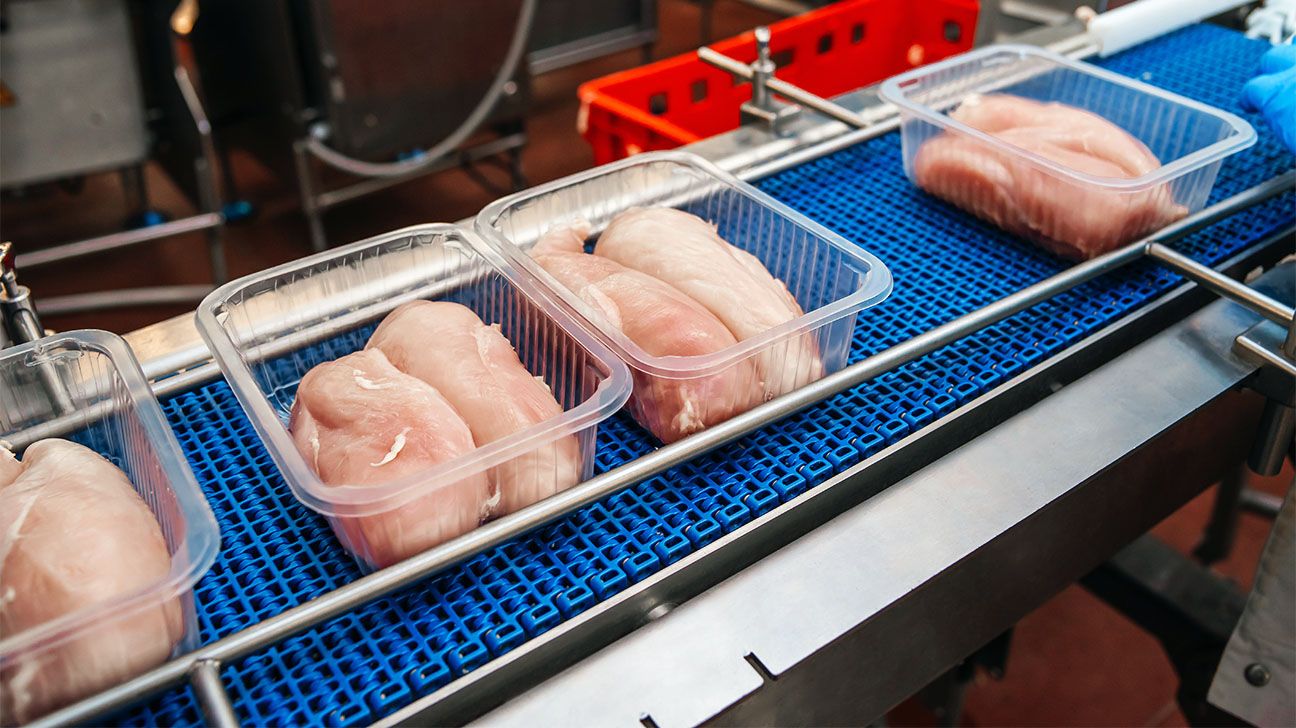
- A new study finds that nearly one-fifth of urinary tract infections can be linked to E. coli bacteria in chicken, turkey, pork, or beef.
- The researchers say that animal-borne infections are more likely to affect people living in low-income areas, females, and older adults.
- Industrialized farming is likely encouraging the presence of the bacteria responsible for the infections.
- Best practices for the prevention of a UTI remain what they have always been: careful washing and careful maintenance of clean food-preparation surfaces.
The research suggests that animal foods may be an under-reported source of UTIs, widening the view of UTI prevention to include a need for stronger protection of the public food supply.
The study, published in mBio on October 23, found that 18% of UTIs were linked to animal-based foods.
Chicken and turkey were seen to be the foods most closely associated with zoonotic infections. Pork was next-highest, and then beef.
Females and older adults were more likely to have UTIs than males or younger people.
UTIs are primarily caused by the bacteria Escherichia coli, or E. coli. They are among the most common bacterial infections globally. E. Coli is present in both humans and animals, but recent research suggests that zoonotic transmission of E. coli from animals may be an under-recognized reservoir of infections in humans.
UTIs account for about 8 million doctor visits each year in the U.S., with about 10 in 25 females and 3 in 25 males experiencing a UTI at some point in their lives.
The research involved 23,483 subjects with UTI in eight counties in Southern California. The researchers analyzed 12,616 E. coli isolates from retail chicken, turkey, pork, and beef purchased in the area.
The study’s authors believe that its findings are likely applicable nationwide. “These infections are likely to occur anywhere the contaminated meat is consumed,” said senior author Lance B. Price, PhD, professor at the Milken Institute School of Public Health at The George Washington University.
“Most of the meat and poultry produced in the United States is distributed across the country,” Price told Healthline.
Around 88% of the urinary tract infections (UTIs) reported in the study occurred in females. This is not surprising since females are
Sherry Ross, MD, OB-GYN and women’s health expert at Providence Saint John’s Health Center in Santa Monica, CA, explained why. Ross wasn’t involved in the study.
“The female anatomy is a setup for infections of the bladder,” Ross told Healthline.
“The bladder and its tubing, called the urethra, sit directly along the length of the vagina. Urine exits the body through this very short tube. The opening of the urethra is a tiny hole right above the entrance into the vagina that leads into the bladder.”
“E. coli-contaminated meat sources can be unexpectedly transferred to the hands, and other communal surfaces,” she continued, “[and] easily be transferred by touch to the anal area. Since the anal area is near the urethra, transfer of this harmful bacteria into the bladder can occur, increasing the risk of a UTI,” Ross continued.
Price explained that socioeconomic factors drive UTI infection rates.
“One of the bottom lines from our study is that people living in the poorest neighborhoods are at the greatest risk for getting food-borne UTIs,” he said.
“There have been lots of studies showing that UTIs are associated with both economic loss, [and] also decreased quality of life.”
“Therefore,” he said, “people who are already disadvantaged may be experiencing additional hardships due to these infections.”
People living in low socioeconomic areas had a 1.6-fold increased risk of zoonotic UTIs compared to those in favorable socioeconomic areas.
The infection rate in low socioeconomic areas was as high as 21.5%, 60% greater than that in higher-income areas.
Hispanic people had around 37% more UTIs than non-Hispanic white people at 31%.
Price proposed that industrial agricultural practices are likely amplifying UTI rates caused by E. coli.
“Livestock producers could vaccinate against the highest risk strains of E. coli to eliminate them in the animals and, potentially, reduce disease in humans and the animals themselves,” Price said.
Ross noted that it was traditionally assumed that stool containing E. coli would be “transferred to the bladder during sexual activity, but now, studies show this bacteria can come directly from an animal source, if proper hand hygiene is not followed.”
“Contaminated food sources with E. coli, including meat, chicken, and turkey, can be transferred from unwashed hands to the anal area, putting women at risk for UTIs,” Price continued.
