



Since Bilal Muhsin joined BD last year as president of its connected care business, the former Masimo chief operating officer has overseen the launch of key data and artificial intelligence initiatives designed to assist clinicians monitoring patients in the hospital.
The connected care segment includes patient monitoring systems and medication management, including BD’s Pyxis automation medication dispensing systems and Alaris infusion pumps. BD received a warning letter from the Food and Drug Administration in 2024 related to its Pyxis dispensers. The company told MedTech Dive that it has completed commitments to the FDA and is working with the agency toward a resolution.
Last fall, BD launched in the U.S. a new version of its Pyxis dispenser, Pyxis Pro. The company also rolled out a new AI platform, called Incada, that pulls together data from BD’s various devices.
MedTech Dive spoke with Muhsin to catch up on his new role, the recent device launches and BD’s approach to AI.
This interview has been edited for length and clarity.
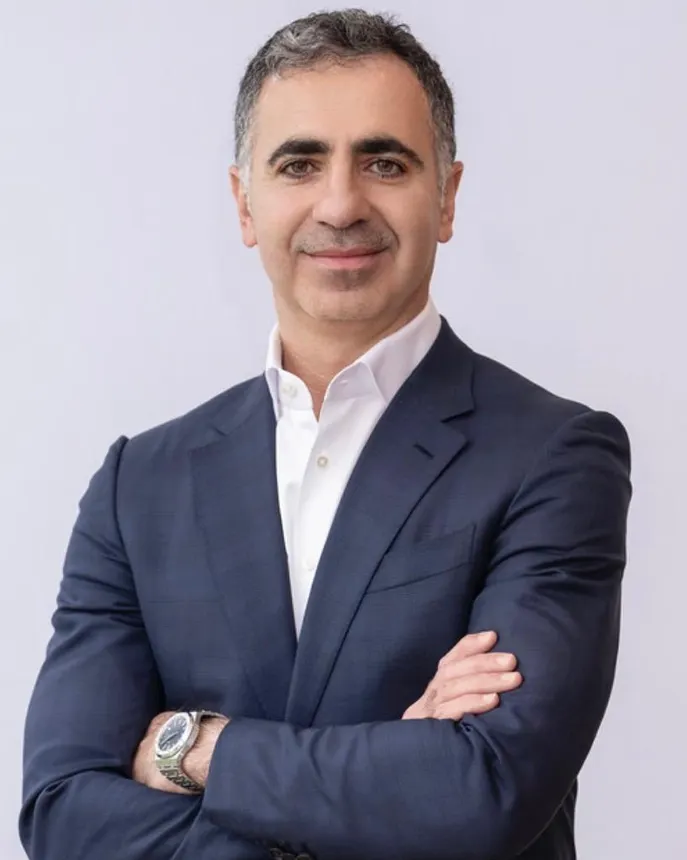
Bilal Muhsin is BD’s president of connected care.
Permission granted by BD
MEDTECH DIVE: What has your focus been since you joined BD last year?
BILAL MUHSIN: I joined BD because of a purpose. The connected care segment is extremely intriguing, because we’re the only company in the world that knows what’s going into the body from our Pyxis solution: What’s being dispensed into that patient for oral medications or is being infused into them through our pumps.
We also have the monitoring capability, so we know what’s going into the patient and what’s happening in real time. With that kind of information, we can have a huge impact.
That’s what really got me excited about a year ago.
How are you looking to connect these systems?
One example [is] we can look at between our infusion pumps and our advanced patient monitoring. We know what’s happening in that patient in real time from a blood pressure standpoint, and if a clinician is providing a blood pressure medication to that patient and is expecting the blood pressure to either go up or down, and it’s not doing that, we can immediately intervene.
Or, better yet, if they want to titrate medication for that patient, we can now titrate it, not based on the clinician walking in the room [and] looking at the monitor.
If we want to titrate up or titrate down that medication based on a physiological response that is coming from that patient, we can now automate that entire process and save a lot of clinician time.
What types of technologies are you using to accomplish this? Is it machine learning, generative AI, etc.?
We have different types of problems we can solve, and we will use different types of models to solve those problems. When it comes to workflow enhancements, we have a lot of what’s happening with medication management across the hospital system. In those cases, we can let agentic [AI] come in, play a big role, provide insights and actually take action on how to manage inventory, for example.
For solutions that are more clinical in nature, here we want to be a lot more careful, and we always want to have a clinician in the middle. We have a lot of machine learning algorithms. We’ve already launched a lot of predictive notifications that come onto our advanced patient monitoring solutions today. So we can predict before somebody goes into hypertension 15 minutes before. Those things, we’ve been getting regulatory clearance and shipping into market today. As we advance more into that, we want the clinician to stay in the middle.
As we talk about alerts, how do you find the balance between making something helpful and avoiding alarm fatigue?
When you look at nurse time and what it’s spent on, a lot of it’s spent on alarms coming from the monitor or alarms coming from the pump.
Mostly, everything’s threshold-based alarms. There’s a trigger that occurs based on a value increasing or decreasing beyond a certain number.
As this model of patient data gets more advanced, we’re looking at a lot more parameters at the same time, and now we can predict whether the patient is actually going in a certain direction or is stable and just moved for a second or took off the sensor. There are ways to know, is this a true deterioration that is occurring to the patient that we need a nurse to walk into, or is this something that’s going to be episodic in nature and disappear really quickly?
As we track more and more of the data, and as we become more predictive in what we’re doing, we should actually reduce the number of alarms. The idea is, as this gets smarter, to eventually eliminate these threshold-based alarms, because these smarter alarms will come through and they’ll be much more actionable for the clinicians.
What information are you providing to clinicians with these alerts?
What we want to do is be transparent in terms of what’s causing these things to trigger. So not only are we saying, hey, there’s a deterioration that is occurring for this patient, but here are the four or five things that are highly factoring into the reason why we’re saying that. If you want to dig more, we can give you more.
There’s also an issue of having too much information. You see all these massive dashboards go up in hospitals, and everybody gets lost, and we want to actually simplify.
For Incada, what types of data are you planning to aggregate and what are you looking to accomplish with that?
I would split it into two realms. We can impact a lot of workflow enhancements, [such as] how service is handled for these devices in hospitals. We’ll be more predictive in terms of when you need service and how service will be handled, which will save hospitals a lot more money and be less downtime for all of their solutions.
Then, there’s a whole other side, which is the clinical side. Here, the real time-ness of our data is what’s going to bring us the biggest differentiation. EMRs have a lot of this data already. [But] there’s a difference in what type of data we’re accessing first.
Electronic medical records, for example, will take a snapshot of data from what’s happening in that room, in a physiological monitoring sense, at best every 15 minutes. A clinician walks in, looks in for a snapshot, and then closes it, and then comes back 15 minutes later, has to make a decision on what happened to that patient during that time and what’s going to happen next.
[With Incada,] that real time-ness of that waveform will allow it to be a lot more predictive because it’s going to know exactly when that drug was infused, how much of it exactly was provided to that patient, and what type of reaction exactly happened at that time, and where the trajectory is going. At the same time, we’re also collecting the electronic medical record data as well, and feeding it into the AI. This is how it’s going to be enhanced with much richer data.
Are you planning to offer Incada as standalone software or package it with the devices you’re selling to hospitals?
What we’re hearing from [hospitals] is it’s very hard for them to solve these problems with bits and pieces. They get a bunch of vendors in a room, they try to buy a data aggregation system, hire an AI company to look at the data, and they’re trying to glue this thing together, and it becomes very complex and very costly for them.
We’re building a cloud-based solution that spans the continuum of care for them. We already sell a lot of these devices to them. We’re going to be able to enable Incada above what they’re running. Now, the more of our devices in the ecosystem they have, the more valuable the data will become, and more powerful the AI will be.
That capital cost that typically you need to do, that’s already either invested. Or even if they’re buying a completely new solution, we can layer in a SaaS model above it that is a reasonable cost factor to them, but adds a lot of value.
